


Leibniz-LSB@TUM-News 2020
December
Happy holidays
The Leibniz-LSB@TUM wishes everyone happy holidays and a good start into 2021.
Stay healthy!

Excellent master's thesis
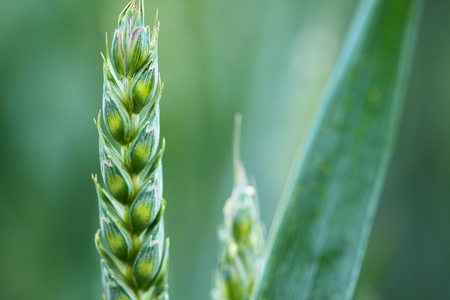
Sarah Jöstl was awarded the 2020 WIG Study Prize by the Weihenstephan Institute for Grain Research for her master's thesis "Alpha-Amylase Trypsin Inhibitors in Processed and Unprocessed Foods from Wheat, Barley and Rye". The prize is endowed with 1,000 euros and was awarded at the meeting of the WIG Research Advisory Board on December 1st, 2020. The Leibniz-LSB@TUM congratulates.
November
Biomolecules as data storage−New approach makes data storage with artificial DNA cheaper
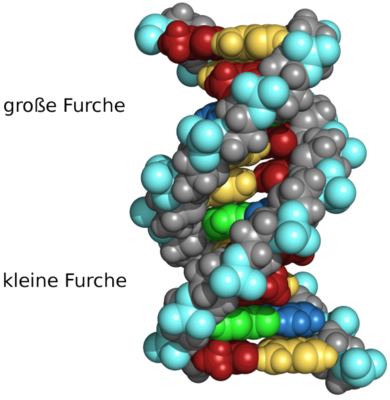
The genetic information is stored in cells in huge biomolecules called deoxyribonucleic acid (DNA). For several years, researchers have been investigating whether these molecules are also suitable for the permanent storage of completely different information, e.g. Mozart's music or scientific data. The advantage of this type of data storage is obvious: DNA has an incredibly high storage capacity and can be stored for a very long time if stored correctly. However, DNA storage has the disadvantage that it is very expensive. An international team of scientists, including Prof. Mark Somoza from Leibniz-LSB@TUM, has now found a way to reduce the cost of this type of data storage.
You can read how it works here: Antkowiak PL, Lietard J, Darestani MZ, Somoza MM, Stark WJ, Heckel R, Grass RN (2020) Nat Commun, DOI: 10.1038/s41467-020-19148-3. Low cost DNA data storage using photolithographic synthesis and advanced information reconstruction and error correction
Sweet taste reduces appetite?
Freising, November 10, 2020
To date, very little is known about how sweetness perception contributes to satiety. This study, conducted by an Austrian-German team led by chemists Veronika Somoza and Barbara Lieder, provides new insights into the relationship between the sweet taste of sugar, energy intake and the regulatory process of hunger and satiety. The study was published in the journal „Nutrients“.

October
Modern channel research on grapevines
Aquaporins are proteins that form channels in the cell membrane to facilitate the membrane passage of water and some other small molecules. In plants these channels can be divided into five subgroups. An international team of scientists has now studied the interior architecture of an aquaporin found in grapevines to learn more about the molecular function of such channels. Dr. Antonella Di Pizio from Leibniz-LSB@TUM was also involved in the structural bioinformatic analysis.
Tracking down allergens - wheat genes are crucial
Amylase trypsin inhibitors (ATIs) are proteins that are naturally found in both ancient and modern wheat species. They are among the most important wheat allergens and are suspected of causing non-celiac gluten sensitivity or intensifying other inflammatory reactions. A team of scientists led by Prof. Dr. Katharina Scherf has now developed a new analytical approach at Leibniz-LSB@TUM, that enables the quantitation of the 13 most important ATI variants in grain samples. Using this method the team showed that wheat genes and thus the wheat species influence the ATI content of the cereal flour more than the growing conditions. Einkorn, in particular, has the lowest ATI content, whereas spelt is the ATI-richest, if you compare both types of grain with emmer, bread and durum wheat.
Funding: Projects AiF 18355 N and AiF 19924 N. This IGF Project of the FEI was supported via AiF within the program for promoting the Industrial Collective Research (IGF) of the German Ministry of Economic Affairs and Energy (BMWi), based on a resolution of the German Parliament.

September
Dr. GPCR Podcast Episode 12#:
Using computational pharmacology to understand chemosensory GPCR function ‒ Interview with Dr. Antonella Di Pizio
In this episode of the Dr. GPCR podcast, we meet with Dr. Antonella Di Pizio, an independent research group leader at the Leibniz-Institute for Food Systems Biology at the Technical University of Munich. Antonella trained as a medicinal chemist in Italy, which she followed up by a Ph.D. in computational medicinal chemistry, during which she developed a taste for structural biology. Antonella then moved to Israel, where she first started working on bitter taste GPCRs in Dr. Masha Niv's lab. Today, Antonella has expanded her research to olfactory GPCRs and trace amine receptors. Join us to learn more about chemosensory GPCRs and how computational pharmacology can help better understand their function.
You will find the podcast here: https://podcasts.google.com/feed/aHR0cHM6Ly9hbmNob3IuZm0vcy8xM2UwNjQyMC9wb2RjYXN0L3Jzcw==
Optimized fruit foam production preserves key odorants
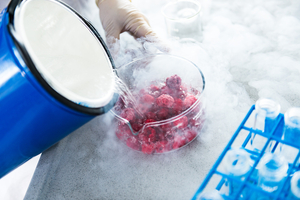
Dried fruit foams are a healthy alternative to conventional snack products. However, their production is associated with a loss of key odorants. As a study of the Leibniz-LSB@TUM using the example of raspberries shows, the loss can be reduced by three measures: 1. A better separation of pulp and seeds, 2. Using microwave assistance during freeze-drying, 3. Limiting the added amount of foaming and thickening agents to the technologically required minimum. "Our findings serve to develop high-quality and at the same time sensory attractive snack products that contribute to a healthy diet," says principal investigator PD Dr. Martin Steinhaus.
Funding: Project AiF 19015 N. This IGF Project of the FEI was supported via AiF within the program for promoting the Industrial Collective Research (IGF) of the German Ministry of Economic Affairs and Energy (BMWi), based on a resolution of the German Parliament.
Dr. Franziska Haag receives „Zukunftspreis der Lebensmittelchemischen Gesellschaft“
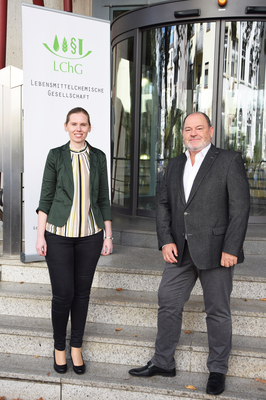
On September 22, 2020, the Lebensmittelchemische Gesellschaft (LChG) awarded Dr. Franziska Haag with the "Zukunftspreis der Lebensmittelchemischen Gesellschaft". The LChG is a division of the German Chemical Society (GDCh). For the first time this year, it awards the best dissertation in the field of food chemistry. The prize is endowed with 2.000,- Euro. Due to the coronavirus pandemic and the cancellation of the 49th Food Chemists' Day, the prize was awarded to the young scientist from the Leibniz Institute for Food Systems Biology at the Technical University of Munich at the GDCh's Frankfurt office. The excellent work of the food chemist on the subject of "Identification and characterization of odor receptors for aroma-active thiols in foods" stands out for its innovative character and its special relevance for the future and the further development of food chemistry.
Further information about the award (Only available in German.): https://www.gdch.de/netzwerk-strukturen/fachstrukturen/lebensmittelchemische-gesellschaft/preise-und-ehrungen.html
Altered sulfur metabolism in Crohn's disease
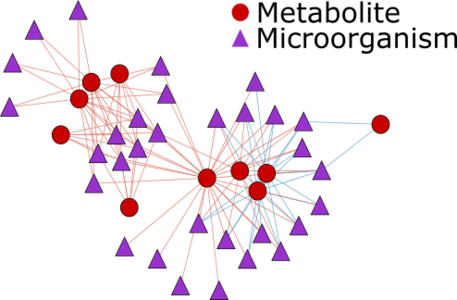
Crohn's disease (MC) is a chronic inflammation of the bowel that cannot be cured so far. Likewise, the causes of the disease have not yet been fully clarified. A study led by the Technical University of Munich now indicates that characteristic changes in the microbiome of MC patients are accompanied by changes in sulfur metabolism. "Our new findings help to predict the intensity of inflammation as well as the probability of relapse after treatment with stem cells and to develop targeted therapies," says Andreas Dunkel from Leibniz-LSB@TUM, who was significantly involved in the measurement of the metabolome data and the bioinformatic evaluation.
Prof. Dr. Veronika Somoza has been awarded the AGFD Fellow Award 2020
Freising, September 7, 2020
The Agricultural and Food Chemistry Division (AGFD) of the American Chemical Society (ACS) has awarded Prof. Dr. Veronika Somoza with the AGFD Fellow Award, Agricultural and Food Chemistry 2020. The prize, which has been awarded to ACS members since 1988, honors outstanding scientific contributions in the field of agricultural and food chemistry.

August
Is modern wheat off the hook?
Gluten in wheat: What has changed during 120 years of breeding?
In recent years, the number of people affected by coeliac disease, wheat allergy or gluten or wheat sensitivity has risen sharply. But why is this the case? Could it be that modern wheat varieties contain more immunoreactive protein than in the past? Results from a study by the Leibniz-Institute for Food Systems Biology at the Technical University of Munich and the Leibniz Institute of Plant Genetics and Crop Plant Research are helping to answer this question.
COVID-19 and the chemical senses
A disturbed sense of smell and taste is the predominant neurological symptom of COVID-19 disease. However, in most cases this is not accompanied by a cold or a blocked nose. For this reason, scientists currently assume that the SARS CoV-2 virus impairs chemosensory perception via different mechanisms than ordinary cold viruses do. A review article recently published in the scientific journal Neuron summarizes the knowledge gained so far. Antonelle Di Pizio from Leibniz-LSB@TUM has contributed significantly to this.
Publication:

July
Fourfold gain for the Executive Board and the Scientific Advisory Board of the FEI:
Co-optation of Jürgen Ahlers, Prof. Dr. Ulrich Fischer, Christin Haupt und Prof. Dr. Veronika Somoza
On July 1, 2020, the Forschungskreis der Ernährungsindustrie e.V. (FEI) will gain fresh expertise for its key management bodies: Newly co-opted into the FEI's now ten-member board of directors are Jürgen Ahlers und Christin Haupt. The Scientific Advisory Board of the FEI, which advises the Board of Directors and now comprises twelve members, is enriched by Prof. Dr. Ulrich Fischer und Prof. Dr. Veronika Somoza. (The press release of the FEI is only available in German language https://www.fei-bonn.de/presse/pressemitteilungen/pm-20200630-zugewinn.)
June
Chanterelle mushrooms as a taste enhancer
New method for quality control of chanterelle mushrooms
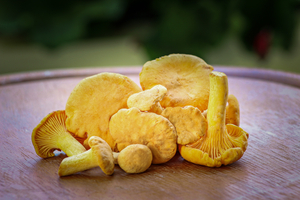
Chanterelles give savoury dishes a rich body and a unique complex flavour. Experts refer to this as the kokumi effect. A research team from the Technical University of Munich (TUM) and the Leibniz-Institute for Food Systems Biology recently developed the first method to clearly quantify chanterelle-specific key substances that contribute to this effect. This method can also be used for quality control.
Congratulations!
Barbara Lexhaller, who was a member of Prof. Dr. Katharina Scherf's research group, successfully defended her doctoral thesis on the "Pathogenesis of celiac disease: identification of isopeptides between tissue transglutaminase and gluten peptides from wheat, rye and barley by LC-MS/MS" on June 29, 2020. Congratulations to Barbara Lexhaller, and our best wishes for the future!
Latest findings on bitter substances in coffee
Why caffeine is not the sole contributor to bitterness
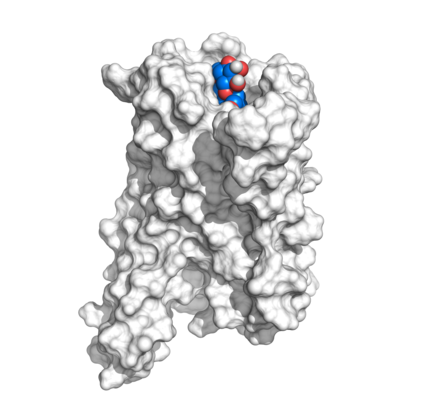
Coffee is very popular around the world despite or perhaps because of its bitter taste. Compounds contained in the coffee such as caffeine contribute to the bitterness to varying degrees. A recent study conducted by the Leibniz-Institute for Food Systems Biology and the Technical University of Munich (TUM) provides new insights into the molecular interactions between bitter substances and bitter receptors. This is of relevance not only for taste perception.
May
Corona viruses and the chemical senses
Lots of reports indicate that infections with SARS-CoV-2, responsible of the current COVID-19 pandemic, are associated with serious olfaction and taste disorders. The new review article provides a comparison with other coronaviruses’ infections, and an overview about the literature already published on this subject as well as individual reports and social trends on this topic. Dr. Antonella Di Pizio from the Leibniz-LSB@TUM is one of the co-authors.
Publication: Pellegrino R, Cooper KW, Di Pizio A, Joseph PV, Bhutani S, Parma V (2020) Chem Senses, DOI: 10.1093/chemse/bjaa031. Coronaviruses and the chemical senses: past, present, and future
https://academic.oup.com/chemse/advance-article/doi/10.1093/chemse/bjaa031/5837137
News on potentially celiac disease relevant gluten fragments from wheat, rye and barley
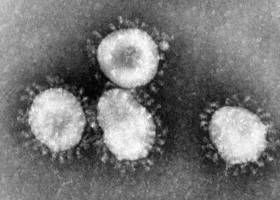
Celiac disease is a chronic inflammatory bowel disease that has characteristics of an autoimmune disease. It is triggered by the consumption of gluten in genetically predisposed individuals. In addition to gluten, an endogenous enzyme, the tissue transglutaminase, plays a decisive role in the development of the disease. On the one hand, the enzyme changes the structure of the gluten fragments that were produced during the digestion of gluten and absorbed through the intestinal mucosa. On the other hand, it binds the gluten fragments firmly to itself. Scientists assume that these enzyme-gluten fragment complexes lead to the formation of autoantibodies that are relevant for celiac disease. A recent study by Leibniz-LSB@TUM now provides new insights into the molecular structure of these complexes and shows for the first time which gluten fragments are preferentially bound. The findings could contribute to a better understanding of the role of the body's own enzyme in triggering coeliac disease.
Funding: The research project (No. 250645717) was funded by the German Research Foundation (DFG), Bonn.

April
Cause for the lack of immune defense against tumors discovered
One of the reasons why cancer develops is because regulatory cells inhibit the body's immune defense. Researchers under the helm of the Technical University of Munich (TUM) have discovered a mechanism for identifying regulatory cells in tumor tissue that suppress an immune response. Their findings may contribute to improving diagnosis and immunotherapy of cancer. Food chemist Andreas Dunkel of the Leibniz-LSB@TUM is one of the co-authors.
Read more: https://www.tum.de/nc/die-tum/aktuelles/pressemitteilungen/details/35998/
Participate in the Global Consortium for Chemosensory Research (GCCR) STUDY
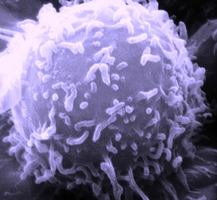
The GCCR is conducting a world-wide scientific study to assess the possible relationships between respiratory illness (e.g., COVID-19, influenza or the common cold) and their effects on smell & taste. Dr. Antonella Di Pizio of the Leibniz-LSB@TUM is a member of the consortium.
To learn more and to participate in the study, click here: https://gcchemosensr.org/
Proteins that sense light also sense taste, at least in fruit flies
Like many animals, you couldn’t see without proteins called opsins, which dwell in the light-sensitive cells of your eyes. A new study reveals for the first time that fruit flies can also use some of these proteins, nestled at the tip of their nose, to taste noxious molecules in their food. Opsins in our bodies could also serve the same function, researchers speculate. The Leibniz-LSB@TUM was involved in the study. By Mitch Leslie.
Read more: https://www.sciencemag.org/news/2020/04/proteins-sense-light-also-sense-taste-least-fruit-flies#
High table salt intake does not reduce the number of salt receptors on the tongue of mice
Sodium is an essential component of common salt and fulfils important tasks in our body. Therefore, sodium levels in blood and cells are strictly controlled by various mechanisms, including the number of epithelial sodium channels (ENaC) in the kidney and intestine. Both organs are involved in the (re)uptake of sodium ions. As a new study of the German Institute of Human Nutrition and the Leibniz-LSB@TUM on a mouse model shows, a high salt intake reduces the number of ENaC in the kidney and intestine, but not in taste cells in which ENaC acts as a salt taste receptor.
March
CrowdfightCOVID19
CrowdfightCOVID19 is an initiative from the scientific community to put all available resources at the service of the fight against COVID-19.
If you would like to help, please go to http://crowdfightcovid19.org/volunteers
If you need help, please go to http://crowdfightcovid19.org/covid19researchers.
Main odorants in barley tea identified
Mugicha (barley tea) is a popular drink in East Asia, which is traditionally prepared by brewing roasted barley grains with hot water. For the roasted barley tea, both hulled and hull-less (naked barley) varieties are used. Until now, little was known about the main odorants of barley tea, in particular it was not clear which compounds contribute to the difference in aroma between naked barley tea and tea made from hulled barley.
Under the leadership of the Leibniz-LSB@TUM, a German Japanese expert team has identified the main odorants in barley tea. Additionally, they demonstrated which compounds are responsible for the more intense smoky note of barley tea from hulled grains.
Read more: https://pubs.acs.org/doi/10.1021/acs.jafc.9b08063
First comprehensive map of the proteome of the model plant Arabidopsis thaliana–A molecular map for the plant sciences
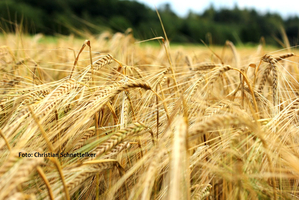
Plants are essential for life on earth. They provide food for essentially all organisms, oxygen for breathing, and they regulate the climate of the planet. Proteins play a key role in controlling all aspects of life including plants. Under the leadership of the Technical University of Munich (TUM), a team of scientists has now mapped around 18,000 of all the proteins found in the model plant Arabidopsis thaliana. Food chemist Andreas Dunkel of the Leibniz-LSB@TUM is one of the co-authors.
Read more: https://www.tum.de/nc/en/about-tum/news/press-releases/details/35941/
Publication: Julia Mergner, Martin Frejno, Markus List, Michael Papacek, Xia Chen, Ajeet Chaudhary, Patroklos Samaras, Sandra Richter, Hiromasa Shikata, Maxim Messerer, Daniel Lang, Stefan Altmann, Philipp Cyprys, Daniel P. Zolg, Toby Mathieson, Marcus Bantscheff, Rashmi R. Hazarika, Tobias Schmidt, Corinna Dawid, Andreas Dunkel, Thomas Hofmann, Stefanie Sprunck, Pascal Falter-Braun, Frank Johannes, Klaus F. X. Mayer, Gerd Jürgens, Mathias Wilhelm, Jan Baumbach, Erwin Grill, Kay Schneitz, Claus Schwechheimer und Bernhard Kuster: Mass-spectrometry-based draft of the Arabidopsis proteome. Nature https://www.nature.com/articles/s41586-020-2094-2
Shooting at the institute
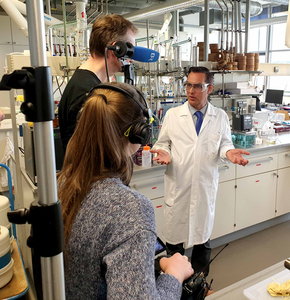
PD Dr. Martin Steinhaus in an interview with BR TV for the programme "Gut zu wissen". Topic: What makes Durian stink. Broadcast date is still pending. Read also: https://www.leibniz-lsb.de/en/press-public-relations/translate-to-englisch-pressemitteilungen/pm-20200228-pressemitteilung-durian/
February
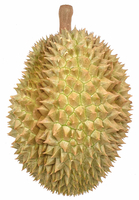
First evidence of rare amino acid in plants–Discovering what makes durian stink
Freising, February 28, 2020
Researchers at the Leibniz-Institute for Food Systems Biology at the Technical University of Munich (Leibniz-LSB@TUM) have confirmed the presence of the rare amino acid ethionine in a plant – or more precisely, in the fruit of the durian tree. Despite its pungent odor, durian is very popular in Southeast Asia. As the team of scientists has shown, the amino acid plays a key role in the formation of the characteristic durian odor.
12th Food Safety Congress in Berlin
The Food Safety Congress offers a varied and interesting specialist programme that covers the entire range of topics and current industry challenges in the areas of food safety and food quality. In addition, the event is an established, important forum of the food industry for personal exchange and networking.
Andreas Dunkel from Leibniz-LSB@TUM gave a lecture at the congress on the topic: Mass Spectrometry in Food Research: Innovative Tool for Sensory Evaluation and Digitization of Processes and Side Streams.
Read more: https://www.managementforum.com/food-safety/
Hop derivatives form a structurally independent group
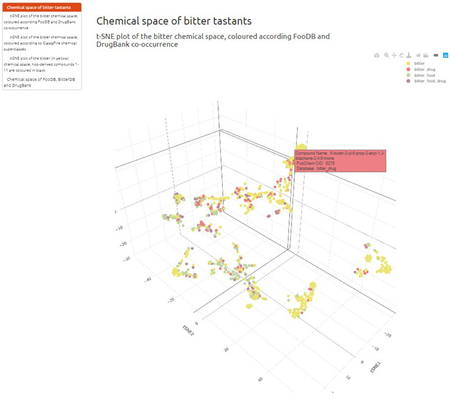
Hop-derived compounds are renowned bioactive molecules and are considered as potential hit molecules for drug discovery to treat metabolic diseases. A chemoinformatics analysis revealed that hop-derived compounds cluster in a different region of the chemical space compared to known bitter food-derived compounds, pinpointing hop derived compounds as a very peculiar class of bitter compounds. You will find the study here.
Chemical Space of bitter tastants
t-SNE-Plots: https://andreasdunkel.github.io/BitterChemicalSpace/#chemical_space_of_bitter_tastants
News about the salt taste receptor
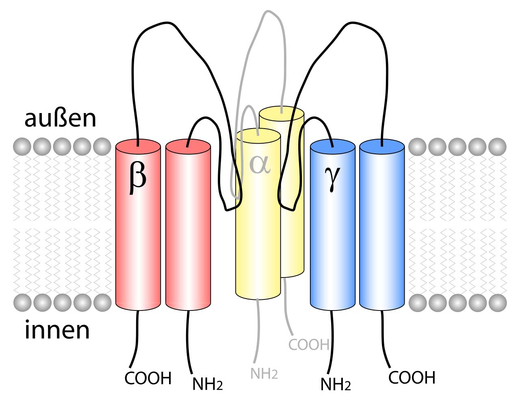
The molecular mechanisms that are decisive for attractive salt taste will probably remain a mystery for a while. Up to now, it has been thought that the canonical "epithelial sodium channel" formed by the three subunits alpha, beta and gamma could be the responsible salt taste receptor not only in rodents but also in humans. However, a new study on mice, in which Leibniz-LSB@TUM is significantly involved, casts doubt on this and suggests a different channel composition. You will find the study here
Food-Matrix potentially influences the effect of dietary fibres
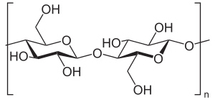
High fibre consumption can have a positive effect on intestinal health, e.g. by increasing stool mass. As a new pilot study by the Technical University of Munich shows, as little as 10 g of insoluble wheat fibre can increase the amount of stool (wet weight) if it is integrated into the normal diet via solid foods every day. However, this effect did not occur when it is consumed by fibre-enriched drinks, at least in the current study. The research group, to which Andreas Dunkel from Leibniz-LSB@TUM belongs, therefore assumes that the food matrix could be decisive for the effect.
Open Access Article: https://www.mdpi.com/2072-6643/12/2/298
Prize for outstanding dissertation
Dr. Sabrina Geißlitz, former doctoral student at Leibniz-LSB@TUM, received the scientific sponsorship award of the Association of German Industrial Bakeries on January 17, 2020 at the 49th Scientific Information Conference of the Berlin-Brandenburg Society for Grain Research e.V. in Berlin. The prize honours her outstanding dissertation entitled "Proteins of einkorn, emmer and spelt: Influence on baking quality and role in wheat-related hypersensitivities".

January

Thanks for Your Engagement!
Each year, the Journal of Agricultural and Food Chemistry (JAFC) recognizes the effort and time referees dedicate to the scientific community with the “JAFC Excellence in Review Award”. In 2019, PD Dr. Martin Steinhaus of Leibniz-LSB@TUM was one of the ten awardees who were selected on the basis of the quality and timeliness of their reviews. Source: Hofmann TF (2020) J Agric Food Chem 68: 1−3, DOI: 10.1021/acs.jafc.9b07943