


AI as a Tool in Flavor Research: De Novo Design of Bitter Peptides
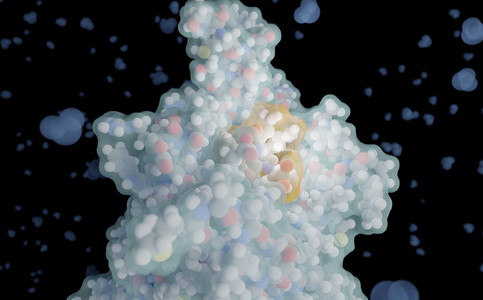
Freising, September 22, 2026 – During the production of fermented products such as kefir, Parmesan, or mountain cheese, as well as in the production of protein powders, bitter-tasting peptides can form, which impair the taste and thus the acceptability of the products. A research team led by the Leibniz Institute for Food Systems Biology at the Technical University of Munich has now developed and successfully tested an AI-based method that can predict the bitterness of peptides. It also makes it possible to design new, bitter-tasting peptides from scratch. This is another important step forward in taste and food research.
Bitter-tasting peptides are produced during the enzymatic or chemical breakdown of proteins and pose a particular challenge in the production of fermented foods or protein hydrolysates. At the same time, they can possess physiological properties and, for example, contribute to the regulation of hunger and satiety.
“To make plant-based protein sources more attractive for food production and to use them more sustainably, we need to better understand which peptides taste bitter and what structural features characterize them. AI-based methods can also make an important contribution here,” says Antonella Di Pizio, principal investigator of the current study, which also involved researchers from the Technical University of Munich and Pompeu Fabra University in Barcelona.
Combination of a Language Model and an Artificial Neural Network
To develop such an AI-supported bioinformatics method, the team led by Antonella Di Pizio combined a protein language model—which the team had previously trained using approximately 500 known bitter-tasting peptides—with the BitterPep-GCN prediction model they had recently developed. This is a so-called Graph Convolutional Network (GCN), a specialized form of artificial neural networks used to analyze structured data.
Based on this, the researchers first generated 161 new peptide sequences that had not yet been experimentally characterized. They then identified those candidates that, according to the model predictions, were highly likely to taste bitter or non-bitter.
Predictions Largely Confirmed
They had the most promising of these peptides synthesized and then tasted by a trained sensory panel. In most cases, the AI predictions were confirmed: Of the 31 peptides tested, the test subjects correctly classified 25 as bitter or non-bitter. In addition, the research team identified numerous previously unknown bitter and non-bitter-tasting peptides.
“Our results show that not only can the bitterness of peptides be predicted, but that our new AI-based method can also be used to specifically design new bitter-tasting peptides,” says Alexandra Steuer, first author of the study and a doctoral student in Antonella Di Pizio’s Molecular Modeling research group. “This brings us significantly closer to the goal of proactively controlling taste characteristics,” adds Antonella Di Pizio.
The scientist emphasizes, that the research is ready to be implemented in application frameworks: “In the long term, these new findings could help to specifically control the formation of bitter-tasting peptides during food production. This would be particularly relevant for plant-based, protein-rich foods, whose acceptance often suffers due to undesirable flavor notes.”
Publication:
Steuer A, Ferri F, Eckrich L, Heidenkampf J, Mittermeier-Kleßinger VK, Schaefer S, Behrens M, Ferruz N, Dawid C, Di Pizio A. De novo design and experimental characterization of bitter peptides. NPJ Sci Food. June 25, 2026;10(1):200. doi: 10.1038/s41538-026-00942-0. https://doi.org/10.1038/s41538-026-00942-0
More Information:
Information about bitter-tasting peptides used for training comes from the Bitter Peptide Space (BPS)-1000 database. www.leibniz-lsb.de/en/databases/bitter-peptide-space-bps-1000-database
The publication “Srivastava P et al. Bitter peptide prediction using graph neural networks. J Cheminform. (2024). https://doi.org/10.1186/s13321-024-00909-x” introduces BitterPep-GCN, a feature-independent graph convolution network for predicting bitter-tasting peptides.
Contacts:
Expert Contact:
Prof. Dr. Antonella Di Pizio
Head of the Molecular Modeling Research Group
Leibniz Institute for Food Systems Biology
at the Technical University of Munich (Leibniz-LSB@TUM)
Lise-Meitner-Str. 34
85354 Freising
Phone: +49 816171-6516
Email: a.dipizio.leibniz-lsb(at)tum.de
Press Contact at Leibniz-LSB@TUM:
Dr. Gisela Olias
Knowledge Transfer, Press and Public Relations
Phone: +49 8161 71-2980
Email: g.olias.leibniz-lsb(at)tum.de
www.leibniz-lsb.de
Information About the Institute:
The Leibniz Institute for Food Systems Biology at the Technical University of Munich (Leibniz-LSB@TUM) comprises a unique research profile at the interface of Food Chemistry & Biology, Chemosensors & Technology, and Bioinformatics & Machine Learning. As this profile has grown far beyond the previous core discipline of classical food chemistry, the Institute spearheads the development of a food systems biology. Its aim is to develop new approaches for the sustainable production of sufficient quantities of food whose biologically active effector molecule profiles are geared to health and nutritional needs, but also to the sensory preferences of consumers. To do so, the Institute explores the complex networks of sensorically relevant effector molecules along the entire food production chain with a focus on making their effects systemically understandable and predictable in the long term.
A Member of the Leibniz Associatation
The Leibniz-LSB@TUM is a member of the Leibniz Association, which connects 96 independent research institutions. Their orientation ranges from the natural sciences, engineering and environmental sciences through economics, spatial and social sciences to the humanities. Leibniz Institutes address issues of social, economic and ecological relevance.They conduct basic and applied research, including in the interdisciplinary Leibniz Research Alliances, maintain scientific infrastructure, and provide research-based services. The Leibniz Association identifies focus areas for knowledge transfer, particularly with the Leibniz research museums. It advises and informs policymakers, science, industry and the general public.
Leibniz institutions collaborate intensively with universities – including in the form of Leibniz ScienceCampi – as well as with industry and other partners at home and abroad. They are subject to a transparent, independent evaluation procedure. Because of their importance for the country as a whole, the Leibniz Association Institutes are funded jointly by Germany’s central and regional governments. The Leibniz Institutes employ around 21,400 people, including 12,200 researchers. The financial volume amounts to 2,3 billion euros.
Note on the use of AI
The press release was first translated from German into American English using DeepL Pro. The researchers then reviewed the text, making corrections where necessary to ensure it was both factually and linguistically accurate.
+++ Stay up to date via our LinkedIn channel +++