


Leibniz-LSB@TUM-News 2024
December
Season’s Greetings and Best Wishes for a Happy New Year 2025!
The Leibniz-LSB@TUM wishes you and your families a peaceful and relaxing holiday season and a happy and, above all, healthy start to the year 2025!

Astrid Fischer is the New Administrative Director at the Leibniz Institute in Freising
Freising, December 2, 2024 – As of December 1, 2024, Astrid Fischer has taken on the role of Administrative Director of the Leibniz Institute for Food Systems Biology at the Technical University of Munich. Together with Prof. Dr. Veronika Somoza, the Scientific Director, the experienced lawyer now forms the Board of Directors of the Leibniz Institute in Freising. She succeeds Michael Paul, who led finance and administration from November 2021 to December 2024 and has resigned for personal reasons.

November
Congratulations and Thank You for the Great Contribution!
Congratulations to Dr. Klaas Reglitz for his great success at the first Freising Science Slam https://curio-city.de/science-slam-freising/ hosted by the five leading scientific institutions at the Weihenstephan campus! With his exciting talk “Aromenvielfalt im Glas: Das Geheimnis von Craft-Bieren”, he took second place last night. The sold-out event at the Lindenkeller was attended by over 200 guests, who rated the presentations of the five slammers with their applause. The Leibniz-LSB@TUM would like to express its sincere thanks to Dr. Klaas Reglitz for his excellent contribution and great commitment.

First Joint Science Slam of the Freising Research Institutions
Science presented in an entertaining way
On Thursday, November 7, 2024, the city of Freising can look forward to a very special event: the first joint science slam of the five leading research institutions in Freising at the Lindenkeller!
Scientists from the Weihenstephan campus will present their research in entertaining, understandable and humorous short lectures. The Technical University of Munich (TUM), the Weihenstephan-Triesdorf University of Applied Sciences (HSWT), the Bavarian State Research Center for Agriculture (LfL), the Fraunhofer Institute for Process Engineering and Packaging (Fraunhofer IVV) and, of course, the Leibniz-LSB@TUM are also taking part. Cooperation partners are the MINT-Region Freising/Curiocity gGmbH and the city of Freising.
Dr. Klaas Reglitz is competing for the Leibniz-LSB@TUM. He is a graduate brewing and beverage technologist. Since 2016, he has been a scientist in the Food Metabolome Chemistry research group at the Leibniz-LSB@TUM. His research focuses on the natural aroma compounds contained in malt, hops and beer. His slam talk is titled: Aromatic Diversity in a Glass: The Secret of Craft Beers
The Leibniz-LSB@TUM would like to thank him very much for his commitment and wishes him every success!
For more information on how to book, please visit: https://curio-city.de/science-slam-freising/

October
Full-Bodied Cheese Flavor
Prediction of Flavor Development Soon Possible Thanks to New Method
Freising, 22. October 2024 – Peptides formed during cheese ripening are crucial for the full-bodied flavor of aged cheeses, known as kokumi. A research team led by the Leibniz-Institute for Food Systems Biology at the Technical University of Munich has now developed a new method to analyze these flavor-relevant peptides precisely, quickly, and efficiently. Based on more than 120 cheese samples, the team has also created a database that can be used in the future to predict flavor development during cheese ripening.
Publication: Fröhlich, S.M., Jünger, M., Mittermeier-Kleßinger, V.K., Dawid, C., Hofmann, T.F., Somoza, V., and Dunkel, A. (2025). Towards prediction of maturation-dependent kokumi taste in cheese by comprehensive high throughput quantitation of glutamyl dipeptides. Food Chem 463, 141130. 10.1016/j.foodchem.2024.141130. https://doi.org/10.1016/j.foodchem.2024.141130
Funding: This IGF project of the research association FEI was funded by the German Federal Ministry for Economic Affairs and Climate Action (BMWK) as part of the program for promoting Industrial Collective Research (IGF) based on a resolution of the German Parliament. IGF project 20776 N.

“Book a Scientist” – Speed Dating with Science
At “Book a Scientist”, you have the chance to talk to an expert from the Leibniz Association online for 25 minutes and ask everything you always wanted to know about your favorite topic. This year, researchers from the Leibniz-LSB@TUM are once again available to answer your questions.
- Cereal proteins: From gluten to celiac disease / Expert: Dr. Barbara Lexhaller, S1, RG Food Biopolymer Chemistry
- Dive into the fascinating world of wine flavors / Expert: Dr. Stephanie Frank, S1, RG Food Metabolome Chemistry
- Bitterness: Everything you always wanted to know / Expert: PD Dr. Maik Behrens, S2, Head of the RG Taste & Odor Systems Reception
To find out which topics and experts from the Leibniz Association are still available, please visit: www.leibniz-gemeinschaft.de/ueber-uns/neues/veranstaltungen/book-a-scientist.
When does “Book a Scientist” take place?
The next “Book a Scientist” event will take place on October 15, 2024. To book a personal expert discussion, register for the Leibniz Association's event mailing list at veranstaltungen(at)leibniz-gemeinschaft.de. You will then receive an invitation in good time with the current discussion offers for “Book a Scientist”.

September
Thaumatin: Natural Sweetener with Anti-Inflammatory Potential
Freising, September 30, 2024 - A new study by the Leibniz Institute for Food Systems Biology at the Technical University of Munich shows for the first time that bitter tasting protein fragments (peptides) are produced in the stomach during the digestion of the natural sweetener thaumatin. In a cellular test system, the peptides are able to stimulate the acid secretion of human stomach cells and influence inflammatory reactions. “Our research helps to elucidate the health effects of the plant protein, which is widely used as a sweetener,” says Veronika Somoza, head of the study and director of the Leibniz Institute.
Publication: Richter, P., Sebald, K., Fischer, K., Schnieke, A., Jlilati, M., Mittermeier-Klessinger, V., and Somoza, V. (2024). Gastric digestion of the sweet-tasting plant protein thaumatin releases bitter peptides that reduce H. pylori induced pro-inflammatory IL-17A release via the TAS2R16 bitter taste receptor. Food Chem 448, 139157. 10.1016/j.foodchem.2024.139157. https://www.sciencedirect.com/science/article/pii/S0308814624008069

Job Matching Day at the Dr. Erwin Elhardt School of Chemistry in Munich
On 24 September 2024, the Job Matching Day took place at the Dr. Erwin Elhardt School of Chemistry in Munich.
‘It was a lot of fun talking to the students about our research topics and their career plans,’ says Dr Gisela Olias, Knowledge Transfer, Press and Public Relations Officer at Leibniz-LSB@TUM.
In addition to Leibniz-LSB@TUM, almost 40 other companies and research institutions took part.
The event was intended to show the BTA, CTA and UTA students as well as the prospective chemical technicians the wide range of opportunities in their chosen professions and to give them the opportunity to make contact with companies and scientific institutions.

52nd German Food Chemistry Conference in Freising!
Five stimulating days of scientific exchange.
Photo: Closing words from Prof. Dr. Corinna Dawid and a big thank you to the energetic helpers on site.

Dr. Christine A. Stübner Received the Future Award of the Society of Food Chemistry
Congratulations!
On September 17, the Society of Food Chemistry (LChG) awarded Dr. Christine A. Stübner the Future Award of the Society of Food Chemistry. The LChG is a division of the German Chemical Society (GDCh). It has been awarding the prize since 2020 for the best dissertation in the field of food chemistry. The prize is endowed with 2,000 euros.
The prize was awarded to the young scientist from the Leibniz Institute for Food Systems Biology at the Technical University of Munich (Leibniz-LSB@TUM) at the festive session of the 52nd German Food Chemistry Days. The food chemist's excellent work on the topic “Development of the Automated Solvent-Assisted Flavor Evaporation and its Application to the Identification of the Key Odorants in Walnut Kernels” stands out due to its innovative character and its special significance for the future and further development of the field of food chemistry.
PD Dr. Martin Steinhaus, supervisor of the work and head of the research group Food Metabolome Chemistry: “This is a great endorsement of the work of our research group and the fact that of the previous five prizewinners, two were honored for work carried out at the Leibniz-LSB@TUM deserves special mention.”
Further information about the prize:
https://en.gdch.de/network-structures/gdch-structures/society-of-food-chemistry/awards-and-honors.html
Also read:
Stübner, C. A. and Steinhaus, M. (2023). Sotolon and (2E,4E,6Z)‑Nona-2,4,6-trienal Are the Key Compounds in the Aroma of Walnuts. J Agric Food Chem 71, 7099-7108. 10.1021/acs.jafc.3c01002. https://pubs.acs.org/doi/pdf/10.1021/acs.jafc.3c01002
and https://www.leibniz-lsb.de/en/press-public-relations/translate-to-englisch-pressemitteilungen/pm-20230614-press-release-walnut-aroma


LSB and IVW: Leibniz Institutes from Bavaria and Rhineland-Palatinate join Leibniz Health Technologies
Jena/Freising, September 09, 2024 - The Leibniz Research Alliance “Leibniz Health Technologies” (LGT) welcomes two Leibniz Institutes as new partners in the research network. With the Leibniz Institute for Food Systems Biology at the Technical University of Munich (LSB) and the Leibniz Institute for Composite Materials (IVW), the Research Alliance is strengthening its areas of “Biomarkers” and “Bioactive Materials” in particular with expertise in metabolite analysis and bioinformatics as well as in implantology.
Information about Leibniz Research Alliances
Leibniz Research Alliances act as internal networking platforms with the aim of pooling complementary expertise from different institutes to pave the way for extra-successful research projects with wide appeal. They are central points of contact for policymakers, industry representatives, supporters, the media and the general public. Leibniz Research Alliances are open to collaboration with universities, non-university research and infrastructure facilities, international research groups and industry partners. The Leibniz-LSB@TUM is a member of one of the five Leibniz research alliances.
Leibniz Research Alliance „Health Technologies”
The member institutes of the Leibniz Health Technologies Research Alliance work on specific technological solutions to urgent medical challenges. Using an interdisciplinary approach, the alliance aims to draw together prevention, diagnostics and therapy. Expertise is pooled from a wide range of scientific disciplines: from photonics and medicine to microelectronics, materials research, economic research and applied mathematics. In this way, innovative health technologies are guided to market maturity along a seamless innovation chain, with the help of industry, hospitals, insurance companies and policymakers. The Leibniz Health Technologies Research Alliance follows a holistic concept, which includes research into the economic, social and ethical consequences of new technologies.
More information: https://www.leibniz-gemeinschaft.de/en/research/leibniz-research-alliances/health-technologies or https://www.leibniz-healthtech.de/en/

52. Deutsche Lebensmittelchemietage 2024 in Freising
The 52nd Deutschen Lebensmittelchemietage (German Food Chemistry Days) will take place at the Technical University of Munich in Freising from September 16 to 18, 2024. The annual conference of the Lebensmittelchemische Gesellschaft (LChG), the largest specialist group of the Gesellschaft Deutscher Chemiker (GDCh), will focus on food quality and consumer protection.
The full program and further information can be found at www.gdch.de/lchtage2024.
The local committee includes representatives of the GDCh, the Bavarian State Office for Health and Food Safety, the Technical University of Munich, the law firm meyer.rechtsanwälte as well as Prof. Dr. Veronika Somoza and Dr. Stephanie Frank from Leibniz-LSB@TUM.

(from left to right; photo by: Angela Lebedicker; missing: Alfred H. Meyer)
August
A Nose for Earthy Notes
Human Odorant Receptor for Geosmin Identified for the First Time
Freising, August 1th, 2024 - Geosmin is a volatile compound of microbial origin with a distinct “earthy” to “musty” odor that can affect the quality of water and food. A research team led by Dietmar Krautwurst from the Leibniz Institute for Food Systems Biology at the Technical University of Munich has now identified and characterized the human odorant receptor for geosmin for the first time.
Publication: Ball, L., Frey, T., Haag, F., Frank, S., Hoffmann, S., Laska, M., Steinhaus, M., Neuhaus, K., and Krautwurst, D. (2024). Geosmin, a Food- and Water-Deteriorating Sesquiterpenoid and Ambivalent Semiochemical, Activates Evolutionary Conserved Receptor OR11A1. J Agric Food Chem. 10.1021/acs.jafc.4c01515. pubs.acs.org/doi/epdf/10.1021/acs.jafc.4c01515

July
Not Everything that Tastes Bitter is Potentially Harmful. But Why?
Study Provides an Explanation
Freising, July 22, 2024 - A bitter taste is traditionally considered a warning sign of potentially toxic substances. But not all bitter substances are harmful. For example, some peptides and free amino acids taste bitter, even though they are non-toxic, nutritious and sometimes even vital for humans. A new study by the Leibniz Institute for Food Systems Biology at the Technical University of Munich now offers the first explanation for this seemingly paradoxical phenomenon.
Publication: Schaefer, S., Ziegler, F., Lang, T., Steuer, A., Di Pizio, A., and Behrens, M. (2024). Membrane-bound chemoreception of bitter bile acids and peptides is mediated by the same subset of bitter taste receptors. Cell Mol Life Sci 81, 217. 10.1007/s00018-024-05202-6. https://www.ncbi.nlm.nih.gov/pmc/articles/PMC11096235/

June
Munich Science Days 2024
A big thank you to everyone who made the Munich Science Days (Münchner Wissenschaftstage) from June 28 to 30, 2024 an unforgettable experience! The event at the Deutsches Museum's Transport Center was fantastically well attended and we had an incredible amount of fun immersing ourselves in the world of sweeteners with you.

Long Night of Sciences (Lange Nacht der Wissenschaften) in Berlin
This weekend (June 22, 2024) the Long Night of Sciences took place in Berlin. The Leibniz-LSB@TUM also participated and presented its research at the joint booth of the Leibniz Research Network "Green Nutrition - Healthy Society" at the Leibniz Headquarter in Berlin. Our booth, located between the booth of the Leibniz Institute of Vegetable and Ornamental Crops and the booth of the German Institute of Human Nutrition in the building of the Leibniz Association, was very well visited. Thank you for all the great conversations and interest in our research.

Inaugural Lecture
The inaugural lecture of Assoc. Prof. Dr. Antonella Di Pizio (Chemoinformatics and Protein Modelling), head of the Molecular Modeling group at Leibniz-LSB@TUM, will take place on Thursday, June 20, 2024, at 2 pm, in Lecture Hall 1 (Dekanatsgebäude, Alte Akademie 8, 85354 Freising).


Leibniz Institute for Food Systems Biology receives certificate for family-friendly personnel policy
Freising/Berlin, June 18, 2024 - The Leibniz Institute for Food Systems Biology at the Technical University of Munich was awarded the "audit berufundfamilie" certificate. Michael Paul, the institute's administrative director, officially accepted the award at the 26th annual ceremony.
Under the patronage of the Federal Minister for Family Affairs, Lisa Paus, the award recognizes organizations that are committed to achieving a better work-life balance. A total of 306 companies, institutions and universities were honored.
Further information can be found at berufundfamilie.de.

AgScience-on-Tap and HEF Academy in the Summer Semester
AgScience-on-Tap is focusing on “Sustainable Food Production & Nutrition” in the summer semester. As part of the Freising event series, Dr. Andreas Dunkel gave a lecture at the Furtnerbräu on 5 June 2024 on the topic: How Will Chocolate Taste in the Year 2100: Sustainable Food Production in Times of Climate Change.

May
New Research Approach: Exploring the Mouthfeel of Food with a Microscope
Freising, May 29, 2024 - A team led by Melanie Köhler and Veronika Somoza from the Leibniz-Institute for Food Systems Biology has presented a new research approach in the journal Nature Food. The perspectives article focuses on different ways to study the mouthfeel of food using atomic force microscopy to better understand the biophysical mechanisms that contribute to taste sensations in a broader sense. New findings in this area could drive the development of health-promoting products that contain less salt, fat, sugar and calories but still have a convincing mouthfeel.
Publication: Koehler, M., Benthin, J., Karanth, S., Wiesenfarth, M., Sebald, K., and Somoza, V. (2024). Biophysical investigations using atomic force microscopy can elucidate the link between mouthfeel and flavour perception. Nat Food 5, 281-287. 10.1038/s43016-024-00958-3. www.nature.com/articles/s43016-024-00958-3

Prof. Olaf Wolkenhauer in First Place for Systems Biology in Germany
Congratulations on your outstanding success!
ScholarGPS™ has appointed Olaf Wolkenhauer, Professor of Systems Biology and Bioinformatics, as a "Highly Ranked Scholar". The successful scientist is ranked first in Germany in the field of systems biology (life sciences, based on publications throughout his career) and sixth worldwide (www.scholargps.com).
Olaf Wolkenhauer is a full professor at the University of Rostock and at the same time visiting professor as well as speaker of Section III and head of the Network Modeling & Machine Learning working group at Leibniz-LSB@TUM.
"Highly Ranked Scholars" are scientists who, due to the outstanding quality of their scientific contributions, are among the top 0.05 percent of all researchers in their field. The data used to determine ScholarGPS™ "Highly Ranked Scholars" is based on either the last five years of scientific activity or the entire lifetime. Each publication and citation is weighted according to the number of authors. Self-citations are excluded.

Bitter Makes the Stomach Acidic, but How?
How Bitter Food Constituents Influence Gastric Acid Production
Freising, May 14, 2024 - In the stomach, so-called parietal cells are responsible for acid production. They react not only to the body's own messenger molecules, but also to bitter-tasting food constituents such as caffeine. A research team from the Leibniz Institute for Food Systems Biology at the Technical University of Munich has now carried out a study on a human gastric cell line. Their results help to clarify the molecular regulatory mechanisms by which bitter substances influence gastric acid production.

IGF Project of the Month May 2024
Off-flavor in multivitamin juice: research team decodes molecular causes and develops minimization strategies
Multivitamin juice is extremely popular in Germany alongside orange and apple juice and offers a good option for supplementing daily vitamin intake. In practice, however, there are occasional complaints from consumers who perceive a very characteristic off-flavor described as cabbage-like, while the taste of the juices in question remains unremarkable. Researchers suspect that the off-flavor is caused by the interaction of added vitamins and juice components. However, the molecular causes of the off-flavor are still largely unclear.
A case for joint industrial research, which a team from Leibniz-LSB@TUM has taken on. The research results will be used to derive recommendations for fruit juice manufacturers on formulation and storage in order to minimize the risk of off-flavors in multivitamin juice.
Project of the month May 2024: https://www.fei-bonn.de/pdm-2024-05

April
Inexpensive Spring Truffles or Exquisite Piedmont Truffles?
New Analytical Method Can Detect Food Fraud
Freising, April 30, 2024 - Some truffles are particularly expensive and therefore often the target of food fraud. For example, high-priced Piedmont truffles (Tuber magnatum) are often difficult to distinguish from the cheaper spring truffles (T. borchii) on the basis of their appearance. Two scientists from the Leibniz Institute for Food Systems Biology at the Technical University of Munich have now developed a new method of analysis. This allows both truffle species to be distinguished objectively and clearly using just two marker compounds. "The method is also fundamentally suitable for routine analyses," explains principal investigator Martin Steinhaus.
Publication: Schlumpberger, P., and Steinhaus, M. (2024). Identification of bis(methylsulfanyl)methane and furan-2(5H)-one as volatile marker compounds for the differentiation of the white truffle species Tuber magnatum and Tuber borchii. J Agric Food Chem. https://doi.org/10.1021/acs.jafc.4c00714

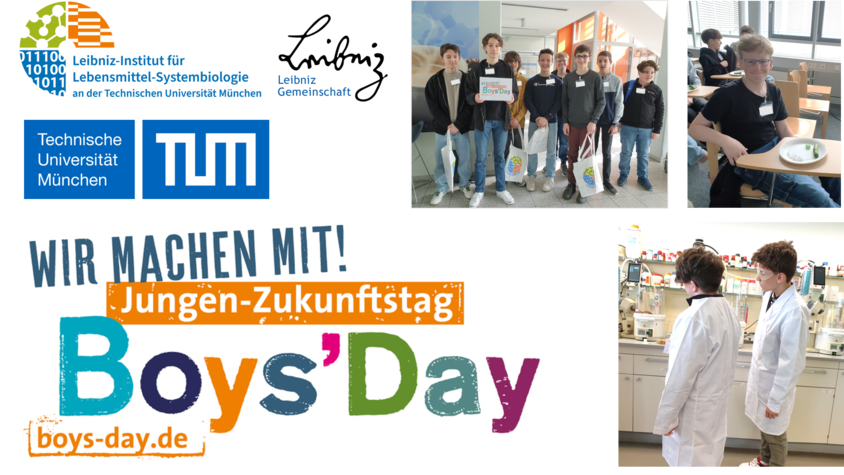
Boys' Day 2024
Today, 12 students took part in an exciting workshop as part of Boys' Day 2024, which was jointly organized by the Leibniz-LSB@TUM and the Chair of Food Chemistry and Molecular Sensory Science at the Technical University of Munich. The event offered the students a fascinating insight into the world of food chemistry and sensory science.
Dr. Johanna Kreißl from the Leibniz Institute and Dr. Oliver Frank from the Chair guided the students through an exciting day full of sensory experiments and scientific findings. The lab tour was also interesting, giving the students a glimpse behind the scenes of the research work. They learned how food chemists approach their work, what technologies they use and what challenges they have to overcome.
Boys' Day 2024 at the Leibniz Institute was not only educational, but also entertaining. Both the students and the organizers had a lot of fun and took the opportunity to ask interesting questions and talk about career opportunities in food chemistry. All in all, it was a very successful day that not only gave the students knowledge, but also enthusiasm for science.
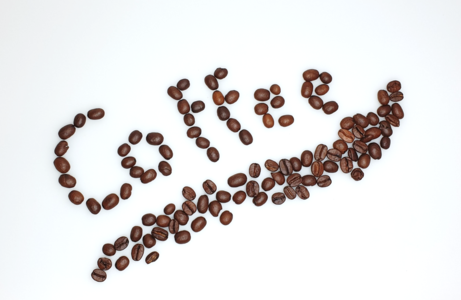
Arabica Coffee: New Bitter Compounds Identified
A key flavor characteristic of coffee is its bitterness. A research team led by Dr. Roman Lang has now identified five previously unknown bitter substances and elucidated their molecular structures. The scientists did this by a model roasting of the sugar-bound cafestol derivative "mozambioside." Some of the newly discovered bitter tasting compounds are more potent than the original substance mozambioside, which itself tastes 10 times more bitter than caffeine and is specifically found in Arabica coffee. The new bitter substances could be detected in brewed coffee. More detailed knowledge of how the new roasted products contribute to the bitter taste is currently being investigated.
Publication: Czech, C., Lang, T., Graßl, A., Steuer, A., Di Pizio, A., Behrens, M., and Lang, R. (2024). Identification of mozambioside roasting products and their bitter taste receptor activation. Food Chem 446, 138884. 10.1016/j.foodchem.2024.138884. https://pubmed.ncbi.nlm.nih.gov/38432139/
Riesling Wines: Human Odorant Receptor for Characteristic Petrol Note Identified for the First Time
Climate change does not stop at grapevines. Too much sun means that the bouquet of German Riesling wines becomes dominated by a petrol note (some) customers do not appreciate. A research team from the Leibniz Institute for Food Systems Biology at the Technical University of Munich has now identified the human odorant receptor responsible for the perception of this special aroma note for the first time.
Publication: Haag, F., Frey, T., Ball, L., Hoffmann, S., and Krautwurst, D. (2024). Petrol Note in Riesling - 1,1,6-Trimethyl-1,2-dihydronaphthalene (TDN) Selectively Activates Human Odorant Receptor OR8H1. J Agric Food Chem. 10.1021/acs.jafc.3c08230. https://pubs.acs.org/doi/10.1021/acs.jafc.3c08230
Welcome, Katharina Scherf!
The Leibniz-LSB@TUM warmly welcomes Katharina Scherf as a new professor and head of the Food Biopolymer Chemistry group. Her main research interests are the protein composition of food and wheat-related disorders, i.e. celiac disease, non-celiac gluten sensitivity and wheat allergy.
"Food chemistry is an interdisciplinary field that enables many exciting collaborations with different specialist areas from plant breeding to product technology," says Prof. Katharina Scherf. Her research activities, also within the ERC Starting Grant GLUTENOMICS, are based on combined expertise in the fields of food chemistry, analytical chemistry, proteomics and immunological tests.
After her studies and the beginnings of her scientific career at the Technical University of Munich, she returned to the Weihenstephan campus after almost five years as a professor at the Karlsruhe Institute of Technology (KIT). At the same time as her position at Leibniz-LSB@TUM, she holds the professorship of Food Biopolymer Systems at the TUM School of Life Sciences since April 2024.
Profile: https://www.leibniz-lsb.de/en/institute/staff/profile-prof-dr-katharina-scherf
Article on the TUM website: https://www.ls.tum.de/en/ls/public-relations/news/news-detail/article/welcome-katharina-scherf/

March
Happy Easter
The Leibniz-Institute for Food Systems Biology at the Technical University of Munich wishes everyone a Happy Easter 2024!

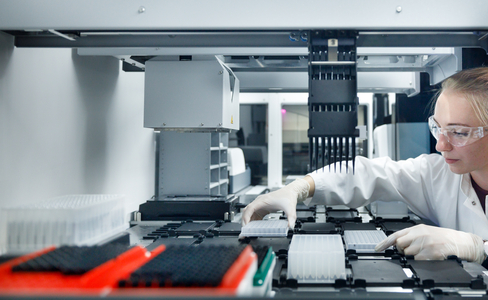
Leibniz Institute for Food Systems Biology at TU Munich is Involved in New Leibniz Labs
Freising, March 21, 2024 - At its meeting on March 19, 2024, the Senate of the Leibniz Association made far-reaching decisions in various cross-institute funding formats. In a new format, the Senate approved three Leibniz Labs for the first time. Each of these labs will be funded for three years with three million euros. The Leibniz Institute for Food Systems Biology at the Technical University of Munich is involved in two of the Leibniz Labs.
Great news!
An article from the Leibniz-LSB@TUM has received enough downloads to become a #TopDownloadedArticle in the journal Molecular Nutrition & Food Research, published by Wiley. The article has been downloaded so many times that it is in the top 10 percent of all articles published last year.
Congratulations to: Dr. Gaby Andersen, Kristin Kahlenberg, PD Dr. Dietmar Krautwurst, and Prof. Dr. Veronika Somoza
Publication: Andersen, G., Kahlenberg, K., Krautwurst, D., and Somoza, V. (2022). [6]-Gingerol Facilitates CXCL8 Secretion and ROS Production in Primary Human Neutrophils by Targeting the TRPV1 Channel. Mol Nutr Food Res, e2200434. 10.1002/mnfr.202200434.
onlinelibrary.wiley.com/doi/epdf/10.1002/mnfr.202200434
Read also: Pungent Ginger Compound Puts Immune Cells on Heightened Alert https://www.leibniz-lsb.de/en/press-public-relations/translate-to-englisch-pressemitteilungen/pm-20230214-press-release-ginger-immune-system/
![[Translate to Englisch:] Symbolbild](/fileadmin/_processed_/a/0/csm_20240320_Andersen_Artikel_Molecular_Nutrition_Food_Reserach_3da73c3657.jpg)
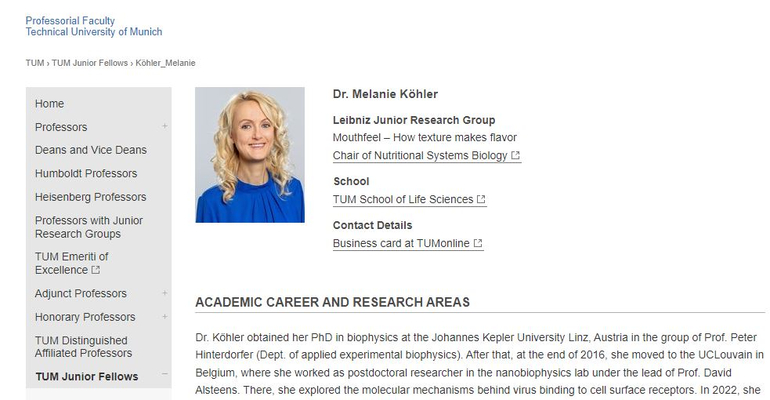
Dr. Melanie Köhler receives TUM Junior Fellow status
Congratulations to Dr. Melanie Köhler, head of the junior research group "Mechanoreceptors" at Leibniz-LSB@TUM, on being awarded the status of "TUM Junior Fellow" in January 2024. Since 2007, the Technical University of Munich (TUM) bestows this title to outstanding young scientists who have acquired independent third-party-funded junior research groups in highly competitive programs. This exclusive circle includes talented researchers who do not yet hold a tenure track professorship.
TUM Junior Fellows are authorized to act as first reviewers for their own employees in doctoral procedures and to review bachelor's, master's and diploma theses by analogy.
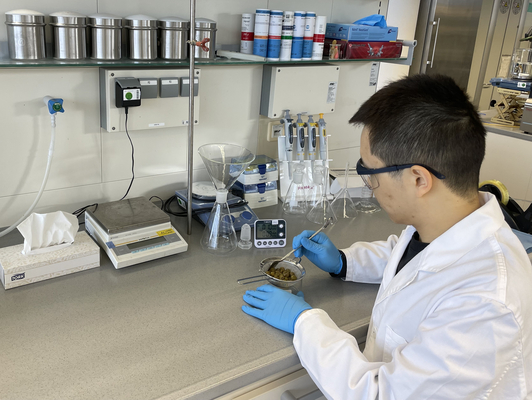
Muscaris Grapes: Molecular Secret of Lychee Note Revealed
Freising, March 11, 2024 - A team of researchers from the Leibniz Institute for Food Systems Biology at the Technical University of Munich has succeeded for the first time in identifying the odorants responsible for the characteristic lychee note of Muscaris grapes. The new findings form the basis for further studies investigating the extent to which the aroma-relevant compounds are transferred from the grapes into wine. At the same time, they provide a scientific basis for the targeted breeding of innovative and resistant grape varieties with distinctly fruity aroma characteristics.
Publication: Wang, X., Frank, S., and Steinhaus, M. (2024). Molecular Background of the Lychee Aroma of Vitis vinifera L. 'Muscaris'. J Agric Food Chem. 10.1021/acs.jafc.3c08298.
pubs.acs.org/doi/full/10.1021/acs.jafc.3c08298
Funding: Xingjie Wang was supported by a scholarship from the China Scholarship Council (CSC) (grant no. 201906300007).
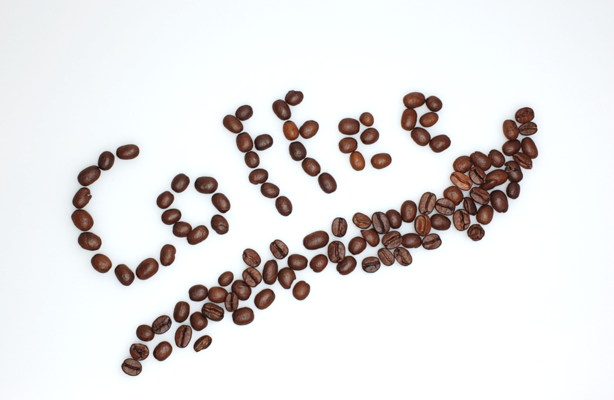
Studies on Coffee Consumption−Biomarker Validated
Freising, March 04, 2024 - In order to record coffee consumption in nutrition and health studies, researchers usually rely on self-reporting by participants. However, this is not always reliable. It would therefore be desirable to conduct additional studies to objectively verify individual consumption using biomarkers. A research team led by the Leibniz Institute for Food Systems Biology at the Technical University of Munich has now validated the suitability of a specific roasted coffee compound and proposes it as a reliable, practical food biomarker.
Publication: Brandl, B., Czech, C., Wudy, S.I., Beusch, A., Hauner, H., Skurk, T., and Lang, R. (2024). Validation of N-Methylpyridinium as a Feasible Biomarker for Roasted Coffee Intake. Beverages 10, 12. 10.3390/beverages10010012. https://www.mdpi.com/2306-5710/10/1/12
February
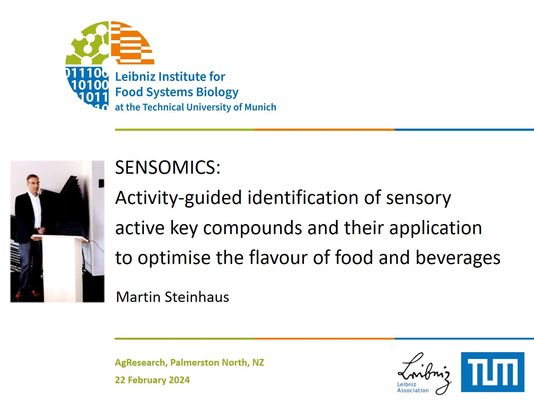
Workshop from February 22-23, 2024 in Palmerston North, New Zealand!
PD Dr. Martin Steinhaus, head of the Food Metabolome Chemistry Research group at the Leibniz Institute for Food Systems Biology at the Technical University of Munich, was recently invited by AgResearch to present the latest research findings from the Leibniz Institute in Palmerston North, New Zealand.
The event was attended by around 80 scientists from AgResearch, the Massey University and the Riddet Institute.
"The event was a complete success and opens up exciting opportunities for future collaborations and joint research projects," reports Martin Steinhaus.
AgResearch is the largest of New Zealand's eight Crown Research Institutes. The Riddet Institute is regarded as the leading national center for food research in New Zealand.
Strengthening everyday skills
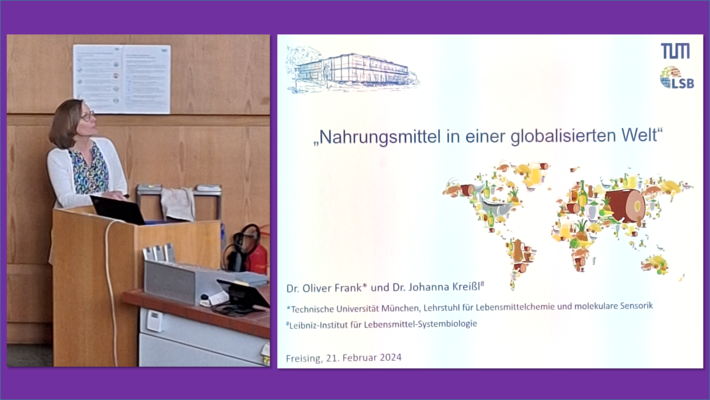
On February 21, 2024, students from the 8th grade of the Josef-Hofmiller-Gymnasium in Freising visited the Technical University of Munich (TUM) as part of a school event on the topic of "Everyday Skills". Together with Dr. Oliver Frank from the Chair of Food Chemistry and Molecular Sensory Science at TUM and Dr. Johanna Kreißl from Leibniz-LSB@TUM, they delved deep into the topic of "Food in a globalized world". The interactive school event, organized in cooperation with TUM and the Leibniz Institute, not only strengthened their understanding of the complexity of food, but also inspired them to be more conscious of food and the environment.
More information at: https://johogym-freising.de/nahrung-wissenschaftlich-betrachtet-exkursion-der-8-klassen-zur-tum/
Congratulations: Doctoral student and junior research group leader honored
Congratulations! Julia Benthin, PhD student in the junior research group "Mechanoreceptors" led by Dr. Melanie Köhler at Leibniz-LSB@TUM, and Melanie Köhler herself were awarded the 1st and 3rd poster prize respectively at the renowned Linz Winter Workshop 2024 on February 4. The 1st prize for Julia Benthin's poster entitled "Mouthfeel - How texture influences taste qualities studied by nanobiophysical approaches", worth 490 euros and sponsored by the RSC Mechanochemistry Journal, is associated with free participation at the next Linz Winter Workshop in 2025.
Photo (from left to right): Dr. Yoo Jin Oh (Group leader, JKU Linz, Austria), Prof. Dr. Peter Hinterdorfer (Head of the Institute of Biophysics, JKU Linz, Austria), Prof. Dr. ir. Ronnie G. Willaert (3rd place, Vrije Universiteit Brussel, Belgium), Kerstin Blank (Prof. Dr. Kerstin Blank, Head of the Department of Biomolecular & Selforganizing Matter (BiOM), JKU Linz, Austria; Editorial Board Member of RSC Mechanochemistry), Julia Benthin (1st place), Sarah Stainer (2nd place, PhD student, JKU Linz, Austria), Melanie Köhler (3rd place).

Leibniz Down Under
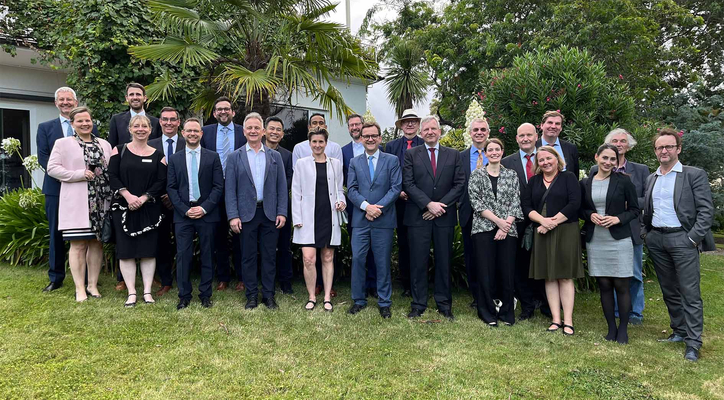
In February, 22 scientists from 18 Leibniz institutes travelled to Australia on a delegation trip. Among them is PD Dr. Martin Steinhaus, who heads the Food Metabolome Chemistry research group at Leibniz-LSB@TUM.The eleven-day trip took them to the four scientific centres of Melbourne, Canberra, Sydney and Brisbane with various universities and research infrastructures. The programme included 70 meetings, 47 of which were scientific workshops to initiate and intensify cooperations between Leibniz institutes and partner institutions in Australia.
We would like to thank Monash University, University of Melbourne, The Australian National University, University of Sydney, University of Technology Sydney, UNSW, Macquarie University, QUT (Queensland University of Technology), The University of Queensland and the German Embassy in Australia for their hospitality.
Read more: https://lnkd.in/d3uPuNG2
Mystery of Novel Clove-Like Off-Flavor in Orange Juice Solved
A research team led by the Leibniz Institute for Food Systems Biology at the Technical University of Munich has solved the mystery of a novel clove-like off-flavor in orange juice, the cause of which was previously unknown. The study proves for the first time that the undesirable flavor note is due to the odorant 5-vinylguaiacol. As the results of the study show, the substance is mainly produced during the pasteurization process when residues of a cleaning agent react with a natural orange juice component under the influence of heat.
Publication: Bauersachs, E., Walser, V., Reglitz, K., Dawid, C., and Steinhaus, M. (2024). Peracetic acid residues in orange juice can lead to a 5-vinylguaiacol-induced clove-like off-flavor via Baeyer-Villiger oxidation of hesperidin. Food Chemistry 440, 138252. doi.org/10.1016/j.foodchem.2023.138252.

January
Congratulations!
Alexandra Steuer, PhD student in the Molecular Modeling research group of Assoc. Prof. Dr. Antonella Di Pizio at Leibniz-LSB@TUM, is one of the winners of the 14th GIRACT European PhD in Flavor Research Awards 2023-2024. The award aims to promote innovative flavor research among PhD students at European universities and research institutions. Applications are open to doctoral students enrolled at universities and research institutes in 35 European countries (European Union, Iceland, Norway, Russia, Serbia, Switzerland, Turkey, Ukraine and the United Kingdom).
The title of the project submitted by Alexandra Steuer is: "Decoding peptides' bitter taste through machine learning models".

3rd Place for Perspective Article in JAFC
The Journal of Agricultural and Food Chemistry (JAFC) has presented its most-read Perspectives from 2020. The article: The True Value of Spirulina by Silke Grosshagauer, Klaus Kraemer, and Veronika Somoza (Director of Leibniz-LSB@TUM) made it to third place, for which Leibniz-LSB@TUM congratulates.
Perspectives in JAFC are concise discussions of a particular field, designed to help readers keep abreast of the advances and trends in agricultural and food chemistry outside their own area of expertise.
Abstract: Algae products are attracting growing interest due to their pleasant taste and their high contents in protein, essential amino acids, vitamins, and minerals. Specifically, spirulina products are widely promoted for their high vitamin B12 content. So far, knowledge regarding the contamination with cyanotoxins, heavy metals, pesticides, or polycyclic aromatic hydrocarbons (PAHs) is scarce, although some studies reported high contaminant levels in spirulina products. The regular intake of spirulina, and very likely other algae products as well, as a dietary supplement in the gram range demands a closer monitoring of potentially harmful constituents.
Happy New Year!
