


Leibniz-LSB@TUM-News
Scientists of the Leibniz-LSB@TUM study the biological functions of sensory active food compounds and trace their effects on the human organism. To achieve this, chemists, biologists, informatics, and sensory scientists collaborate across their scientific disciplines–and they never run short of exciting news.
Archive
2026
October
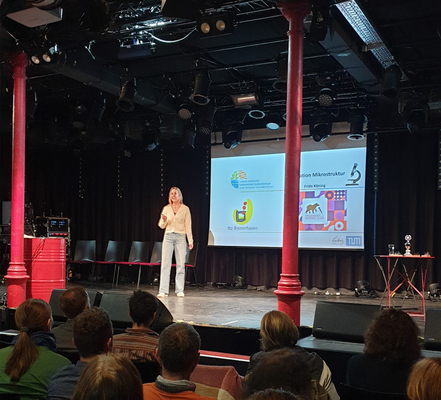
A Successful Evening at the 3rd Freising Science Slam
At the 3rd Freising Science Slam on October 8 at the Lindenkeller in Freising, up-and-coming scientists captivated the audience with creative insights into their research.
The audience decided the winner by applause and crowned Rocciana Bersch from the Bavarian State Institute for Agriculture (LfL) as the winner of the evening. We extend our heartfelt congratulations to her!
Special thanks also go to Frida Köning, who represented Leibniz-LSB@TUM with great dedication and enthusiasm. With her presentation on “The Fascination of Microstructure,” she succeeded in conveying complex scientific questions in a clear and entertaining way.
We would like to thank all the slammers for their passionate and entertaining presentations, host Kim Ludwig-Petsch for her typically confident and engaging moderation of the evening, and the entire organizing team that made this successful event possible. It was an all-around successful evening that demonstrated once again: making science accessible is fun.
September
Leibniz-LSB@TUM Researchers Selected for Bio-SPM Collaborative Research Program in Japan. Congratulations!
Dr. Melanie Köhler, Head of the Mechanoreceptors & Sensory Biophysics Junior Research Group, her postdoctoral researcher Dr. Sanjai Karanth, and PhD student Julia Benthin have been selected for the Biological Scanning Probe Microscopy (Bio-SPM) Collaborative Research Program of the Nano Life Science Institute (NanoLSI) at Kanazawa University, Japan. The program provides financial support for the research stay as well as access to NanoLSI’s state-of-the-art Bio-SPM infrastructure, including High-Speed Atomic Force Microscopy (HS-AFM).
During a research stay in December, the Leibniz-LSB@TUM team will work with Prof. Richard Wong and colleagues at NanoLSI to investigate the conformational dynamics of mechanosensitive Piezo ion channels embedded in native nanodiscs. Using HS-AFM, the researchers aim to visualize Piezo dynamics in real time and explore how food-related physicochemical stimuli modulate channel behavior at the single-molecule level. The project builds on promising preliminary experiments initiated during Julia Benthin’s participation in the NanoLSI Bio-SPM Summer School in 2025.

Job Matching Day at the Dr. Erwin Elhardt Chemistry School in Munich
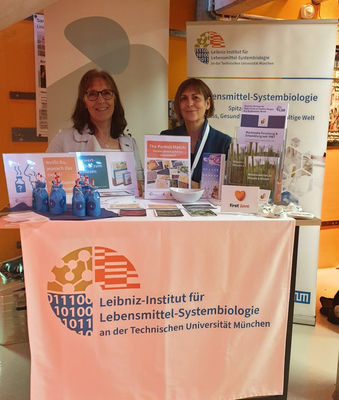
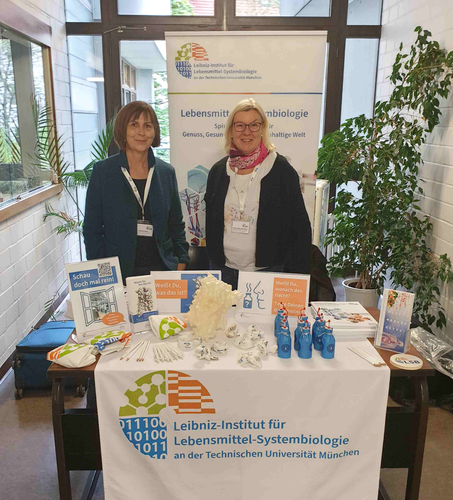
On September 24, 2026, the Leibniz-LSB@TUM took part in the Job Matching Day at the Dr. Erwin Elhardt School of Chemistry in Munich (website available in German only).
“We really enjoyed the event at the School of Chemistry. It was a great opportunity to engage with the students, share insights into our research, and support the young people in exploring their career options,” says Dr. Gisela Olias, Officer for Knowledge Transfer, Press and Public Relations. Together with her colleague Silke Volkhardt-Rouse, she represented the Institute at the information booth.
Around 120 students enrolled in BTA (Biological Technical Assistant) and CTA (Chemical Technical Assistant) training programs attended the event, gaining insights into a wide range of career opportunities and having the chance to connect with representatives from companies and research institutions.
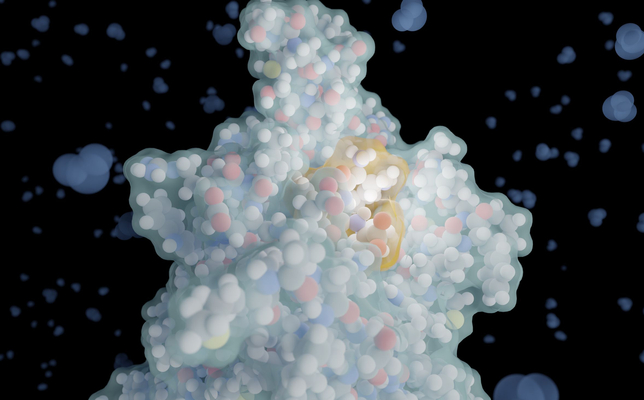
AI as a Tool in Flavor Research: De Novo Design of Bitter Peptides
Freising, September 22, 2026 – During the production of fermented products such as kefir, Parmesan, or mountain cheese, as well as in the production of protein powders, bitter-tasting peptides can form, which impair the taste and thus the acceptability of the products. A research team led by the Leibniz Institute for Food Systems Biology at the Technical University of Munich has now developed and successfully tested an AI-based method that can predict the bitterness of peptides. It also makes it possible to design new, bitter-tasting peptides from scratch. This is another important step forward in taste and food research.
Publication: Steuer, A., Ferri, F., Eckrich, L., Heidenkampf, J., Mittermeier-Kleßinger, V. K., Schaefer, S., Behrens, M., Ferruz, N., Dawid, C., & Di Pizio, A. (2026). De novo design and experimental characterization of bitter peptides. npj Science of Food, 10(1), Artikel 200. https://doi.org/10.1038/s41538-026-00942-0
“Book a Scientist” Enters the Next Round
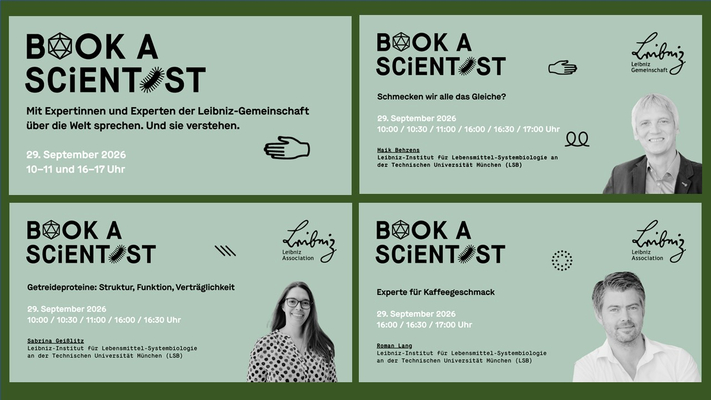
“Book a Scientist” enters the next round: On September 29, 2026, the Leibniz Association will once again host a digital science speed-dating event. In free, 25-minute online conversations, interested participants can ask researchers their questions directly. Representing the Leibniz-LSB@TUM will be PD Dr. Maik Behrens on the topic of taste perception, Dr. Roman Lang as an expert on coffee flavor, and Dr. Sabrina Geißlitz on cereal proteins and gluten. The sessions can be booked via the Leibniz Association’s website: https://www.leibniz-gemeinschaft.de/ueber-uns/neues/veranstaltungen/book-a-scientist#bookascientist-topic-463
August
Smoky Off-Flavors in Cocoa Aren’t Caused Solely by Smoke
Researchers show: Overfermentation can also cause undesirable flavors
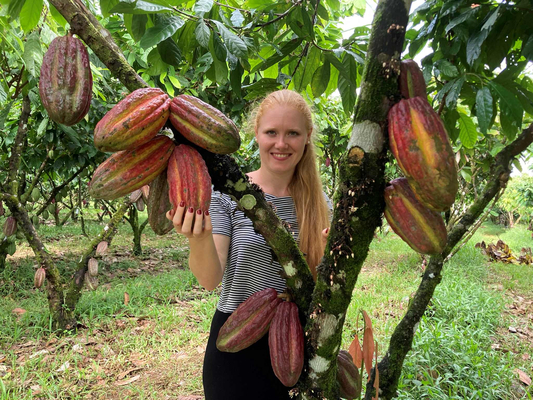
Freising, August 31, 2026 – Fermented cocoa occasionally exhibits off-flavors that can compromise the quality of chocolate and other cocoa products. But what causes these undesirable flavors? Researchers at the Leibniz Institute for Food Systems Biology at the Technical University of Munich have now shown that overfermentation of cocoa beans can cause smoky, leathery, and cheesy off-flavors. Smoky flavors, therefore, are not necessarily attributable to smoke contamination.
Publication: Krause, F., & Steinhaus, M. (2026). Off-Flavor Compounds in Fermented Cocoa: Impact of Overfermentation. Journal of Agricultural and Food Chemistry, 74(29), 23069-23080. https://doi.org/10.1021/acs.jafc.6c05685
Funding: This IGF project of the Research Association of the German Food Industry (FEI) was supported within the program for promoting the Industrial Collective Research (IGF) of the German Federal Ministry of Economic Affairs and Energy (BMWE) on the basis of a decision by the German Bundestag. Project No. 21290. N. Franziska Krause extends her sincere thanks for a doctoral scholarship from the Foundation of German Business (Stiftung der Deutschen Wirtschaft) with funds from the German Federal Ministry of Research, Technology and Space (BMFTR).
Congratulations to Arya Das!—Chu Family Fellowship for a Female Early-Career Researcher at Leibniz-LSB@TUM
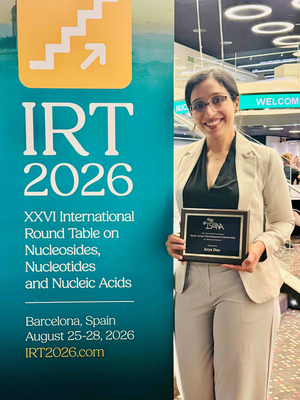
Arya Das, a doctoral student in the Transcriptome & Proteome Profiling research group led by Assoc. Prof. Dr. Mark Somoza at the Leibniz-LSB@TUM, has been awarded a Chu Family Fellowship for female early-career researchers.
Awarded by the Chu Family Foundation (TCFF) in collaboration with the International Society for the Study of Nucleosides, Nucleotides and Nucleic Acids (IS3NA), the fellowship supports women in the early stages of their careers who demonstrate high potential in nucleoside, nucleotide, and nucleic acid research.
The fellowship is endowed with $3,000 and is intended to support targeted professional development, including participation in workshops, training courses, and research stays in other laboratories. Arya Das will use the funding to undertake a research stay in the laboratory of Prof. Masad Damha at McGill University in Canada, where she will further develop her expertise in nucleic acid chemistry.
The award was officially presented during the XXVI International Round Table on Nucleosides, Nucleotides and Nucleic Acids, held from August 25–28, 2026, in Barcelona, Spain.
July
Leibniz-LSB@TUM Wows Visitors at the 2026 Munich Science Days
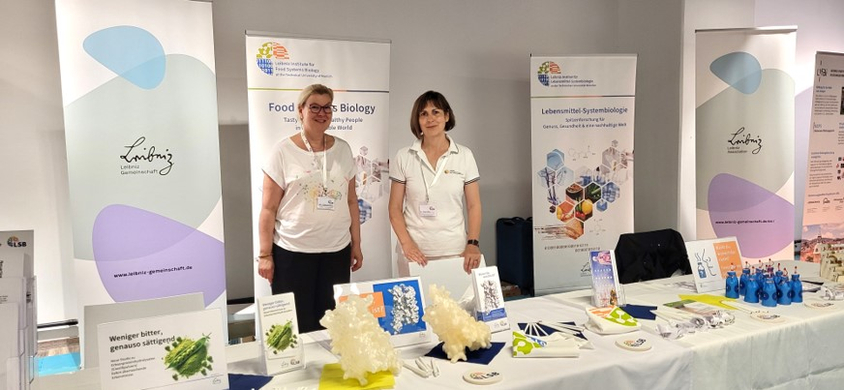
Once again this year, Leibniz-LSB@TUM presented its research at the Munich Science Days as part of the FORSCHA hands-on STEM fair. Under the motto “Protein Sources of the Future – Smell, Taste, Be Amazed!,” visitors were able to experience firsthand the exciting research surrounding sustainable protein sources.
At our booth, interested visitors learned how alternative protein sources can help feed a growing global population. With scent samples, a protein quiz, and exciting tastings, our institute brought current research to life and invited visitors to get involved.
The event was exceptionally well-attended, with around 14,500 visitors—setting a new attendance record. We are delighted by the great interest shown, the many stimulating conversations, and the opportunity to introduce our research to a broad audience.
The Queen Naked Mole Rat’s Scent Ensures Social Cohesion in the Colony
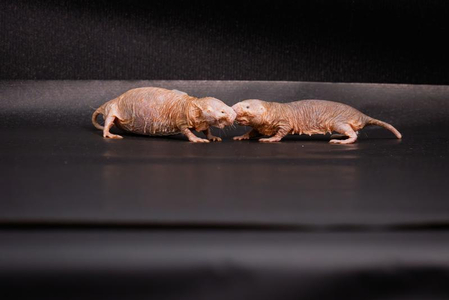
Freising, July 15, 2026 — An international team led by Prof. Dr. Gary Lewin of the Max Delbrück Center in Berlin has demonstrated in the journal *Nature* that the queen of naked mole rats produces a single scent that suppresses reproduction in all other females in the colony. The scent plays a crucial role in maintaining the stability of the highly social naked mole-rat colony.
PD Dr. Dietmar Krautwurst and Sandra Hoffmann from Leibniz-LSB@TUM also participated in the study. Using a cell-based test system that is unique worldwide, they investigated as part of the study whether isopropyl myristate can be detected by human odorant receptors. By screening 766 variants of human odorant receptors, they were able to show that the scent compound activates these receptors only very weakly and is therefore likely largely odorless to humans.
The results provide important insights into species-specific chemical communication among mammals and highlight the differences between the olfactory systems of humans and naked mole-rats. Overall, the study contributes to a better understanding of the molecular basis of olfactory perception and social communication.
Publication: Mohammed Khallaf, Daniel Hart, Wenhan Luo, et al. (2026): “A queen odor mediates reproductive suppression in a eusocial mammal.” Nature, DOI: 10.1038/s41586-026-10772-5
Press release from the Max Delbrück Center: www.mdc-berlin.de/news/press/smell-success
Leibniz-LSB@TUM Rated “Very Good” by the German Science and Humanities Council
In its press release dated July 6, 2026, the German Science and Humanities Council rated Leibniz-LSB@TUM’s strategic expansion proposal with an overall grade of “very good.”
The assessment was conducted at the request of the Joint Science Conference (GWK) of the federal and state governments as part of the review of expansion projects within the Leibniz Association. In its evaluation, the German Science and Humanities Council particularly commended the Institute’s successful reorientation toward interdisciplinary food systems biology. The requested expansion will provide the necessary foundation to consistently advance the Institute’s strategic reorientation towards interdisciplinary food systems biology, pursued since 2018, and to actively shape the development of this dynamic field of research.
For more information, visit: https://www.wissenschaftsrat.de/SharedDocs/Pressemitteilungen/DE/PM_2026/PM_1626
June
Leibniz-LSB@TUM at the Premiere of “Science am Rang”
At the first edition of “Science am Rang” on June 13, 2026, on the Weihenstephan Campus, we welcomed numerous interested visitors to our information booth amid perfect summer weather. Our hands-on activity centered on everyday smells was particularly well-received. Using familiar scents from the kitchen, people of all ages were able to test their sense of smell. The participants also learned about typical odor-causing compounds that often pose a challenge in the production of plant-based foods. In addition, they had the opportunity to taste various pea protein hydrolysates with varying degrees of bitterness.
In numerous discussions, the team explained, for example, how undesirable bitter properties of protein fragments (peptides and amino acids) can be reduced and the role that proteins and peptides play in satiety. A particular highlight was the 3D model of a human bitter taste receptor.
“Science am Rang” impressively demonstrated how exciting, accessible, and tangible science can be. We would like to thank everyone for their great interest, the many curious questions, and the stimulating discussions. We also thank the organizers of “Kino am Rang” for their straightforward and very supportive collaboration.
The event took place for the first time in conjunction with the established “Kino am Rang” series and was a joint project of Weihenstephan-Triesdorf University of Applied Sciences, the Technical University of Munich, the Leibniz Institute for Food Systems Biology at the Technical University of Munich, and the Bavarian State Research Center for Agriculture.

New Study Shows: Standard Tests Do Not Always Detect All Gluten Residues in Barley Beer
Freising, June 8, 2026 – Some barley beers labeled as “gluten-free” contain small amounts of gluten residues that may trigger celiac disease, which are not detected by the standard antibody-based tests currently in use. This is the conclusion of a study by the Leibniz Institute for Food Systems Biology at the Technical University of Munich. In the study, researchers compared two antibody-based testing methods with a mass spectrometric detection method newly developed at the Institute. The study results show that modern food analytical methods could help further improve the safety of gluten-free products in the future.
Publications:
Tissen E., Geisslitz S., Maier B., Scherf K.A. (2026). Identification of celiac disease-active peptides in gluten-free barley beers by nanoLC-MS/MS. Appl Food Res; 6, 101952. 10.1016/j.afres.2026.101952.
Tissen, E., Geisslitz, S. and Scherf, K.A. (2025). Absolute quantitation of celiac disease-active gluten peptides in gluten-free barley beer by targeted nanoLC-MS/MS. Food Res Int. 222, Part 2, 117703. 10.1016/j.foodres.2025.117703.
Funding:
This project was funded under the European Union’s “Horizon 2020” research and innovation program through the ERA-NET Confund Action No. 696296 via the Joint Programming Initiative “A Healthy Diet for a Healthy Life” (JPI HDHL) as well as by the Federal Ministry of Research, Technology, and Space (BMFTR), Project No. 01EA2205A (ImmunoSafe-CeD). The measurements on the Q Exactive Plus Orbitrap mass spectrometer were funded by the German Research Foundation (DFG) under Project No. 445432254.

Why Doesn't Coffee Taste like Caffeine?
Taste testers describe caffeine as very bitter or even medicinal-tasting. And yet, a cup of coffee usually has a pleasant mouthfeel. As a collaborative study by the Technical University of Munich and the Leibniz-LSB@TUM now shows, compounds formed during the roasting of coffee beans through the Maillard reaction mitigate the bitterness of caffeine.
Read more: https://www.acs.org/pressroom/presspacs/2026/june/why-doesnt-coffee-taste-like-caffeine.html
Publication: Gigl, M., Kreissl, J., and Frank, O. (2026). Impact of Interactions between Melanoidins and Caffeine on the Bitter Taste of Coffee Beverages. J Agric Food Chem. 10.1021/acs.jafc.5c17022. https://pubs.acs.org/doi/pdf/10.1021/acs.jafc.5c17022?ref=article_openPDF

PhD Student at Leibniz-LSB@TUM at the 75th Lindau Nobel Laureate Meeting
Congratulations! Julia Benthin, a doctoral student in the Mechanoreceptors & Sensory Biophysics junior research group led by Dr. Melanie Köhler, has been selected to participate in the 75th Lindau Nobel Laureate Meeting (June 28 – July 3, 2026). This long-standing meeting brings together around 75 Nobel laureates and several hundred outstanding young scientists from around the world.
The anniversary meeting is dedicated to interdisciplinarity—an approach that also shapes Julia Benthin’s research: She combines biophysics, food chemistry, molecular biology, and human sensory science to better understand mechanosensory processes in oral texture perception and their influence on flavor perception. Through her participation, she represents Leibniz-LSB@TUM on the international stage and, at the same time, brings new insights from a global scientific network back to Freising. In addition, she will be available during the meeting for interviews and to provide insights into her research.

May
Dr. Sabrina Geisslitz Honored with the 2026 Nazareno Strampelli Award
Dr. Sabrina Geisslitz, scientist in Prof. Dr. Katharina Scherf’s Food Biopolymer Chemistry research group, has been awarded the 2026 Nazareno Strampelli Award (Category B). The prize is endowed with 2,000 euros and recognizes outstanding contributions to wheat research. The award was presented during the 4th International Wheat Congress (IWC4), which took place from May 25–29, 2026, in Bologna (Italy). Presented for the first time, the prize honors the pioneer of modern wheat breeding, Nazareno Strampelli, and is sponsored by an international consortium. It is aimed at early-career and mid-career researchers conducting particularly impactful, application-oriented research. The Leibniz-LSB@TUM extends its warmest congratulations on this international award!
Award-winning publication: Geisslitz, S., Schierenbeck, M., Börner, A., & Scherf, K. A. (2025) Green Revolution reduced height (Rht) genes did not increase amylase/trypsin-inhibitor content in near isogenic wheat lines, Journal of Cereal Science, 126, 104325, https://doi.org/10.1016/j.jcs.2025.104325
The study shows that the dwarfism genes (reduced height genes) used in modern wheat varieties do not increase the content of amylase/trypsin-inhibitors (ATI). It thus provides important evidence in the debate regarding possible causes of breeding-related wheat intolerances.

Bitter Tasting Herbal Extracts Stimulate Gastric Cells
Freising, May 11, 2026 - Bitter-tasting herbal extracts have traditionally been used to support digestion, yet the molecular basis of their effects has remained largely unclear. The Leibniz Institute for Food Systems Biology at the Technical University of Munich has now gained new insights into this mechanism. Using a cellular model, its researchers demonstrated that herbal extracts can stimulate proton secretion in human gastric cells as key mechanism of gastric acid production, with combinations of extracts showing particularly strong effects. Extracts rich in polyphenols proved especially potent. The study further identified three human bitter taste receptor subtypes as key mediators of this response.
Publication: Richter, P., Piqué-Borràs, M.-R., Künstle, G., Somoza, V. (2026). A Digestive Herbal Mixture Preparation Stimulates Proton Secretion in Human Parietal Cells through Phenolic Compounds Targeting Bitter Taste Receptors. Mol. Nutr. Food Res. 70, 6. https://doi.org/10.1002/mnfr.70443.
Funding: The authors declare that this study was financially supported by Weleda AG. The funder was not involved in the study design, data collection, analysis, or evaluation, the writing of this article, or the decision to submit it for publication.
Two of the co-authors declare the following financial conflicts of interest: M.-R. Piqué-Borràs and G. Künstle are employed by Weleda AG in Arlesheim, Switzerland.

April
How Food Works and Tastes: New Junior Research Group Develops Predictive Models
Freising, April 30, 2026 – A new junior research group began its work on April 15, 2026, at the Leibniz Institute for Food Systems Biology at the Technical University of Munich. Led by Dr. Nikolai Köhler, the Integrative Food Systems Analysis group is dedicated to developing computer-based predictive models for the sensory and physiological effects of food compound systems.

Host of the Working Group Meeting
On Wednesday, April 29, 2026, Leibniz-LSB@TUM hosted the Southern Working Group Meeting of the German Society for Sensory Science (Deutsche Gesellschaft für Sensorik, DGSens). During a brief presentation and a tour of the facilities, the Aroma Chemistry research group, represented by PD Dr. Martin Steinhaus and Dr. Veronika Mall, introduced itself and provided fascinating insights into its work. Leibniz-LSB@TUM would like to thank the participants for the stimulating discussion and your visit!
Boys’ Day 2026 in Freising: Challenging Gender Stereotypes in the Food Sector
On April 23, 2026, 14 students in grades 8 through 10 from Freising and the surrounding area experienced just how diverse and exciting careers in the food sector can be during Boys’ Day at the Weihenstephan Campus. The event was hosted by the Leibniz Institute for Food Systems Biology at TUM, in collaboration with the Center of Excellence for Nutrition (KErn) at the Bavarian State Institute for Agriculture (LfL) and the Technical University of Munich (Chair of Food Chemistry and Molecular Sensory Science).
The students gained practical insights into the professional fields of food chemistry and nutrition science/ecotrophology. The interactive smell and taste experiments, the open exchange with scientists, and the shared snack break followed by a feedback session were particularly well-received.
Feedback from the participants:
interesting – exciting – definitely worth recommending.
Many thanks to everyone involved—and especially to the students for their curiosity and keen interest.
We would also like to extend our heartfelt thanks to Dr. Oliver Frank (TUM) and Dr. Johanna Kreißl (Leibniz-LSB@TUM) for the vivid and interactive insights into the daily work of a food chemist.
We would also like to thank Christine Röger (KErn) and her team, including Lara Kilian, Silke Weiß, and Linda Bergmann, for their excellent collaboration and organization, the exciting technical insights, and the inspiring sensory experiments, which provided numerous “aha” moments for all participants.
Special thanks go to Ph.D. candidates Silvia Schäfer and Timm Michel (Leibniz-LSB@TUM) as well as Lara Kilian (KErn), who spoke openly about research, their Ph.D. studies, and career paths in science, and answered many questions about current nutrition trends.

New Research Approach Improves the Flavor Stability of Flaxseed Oil and Extends Its Shelf Life
Freising, April 20, 2026 - How can the mild flavor of flaxseed oil be preserved for longer? A research team led by Roman Lang from the Leibniz Institute for Food Systems Biology at the Technical University of Munich has investigated this question. As the team demonstrates in its latest study, natural precursors of bitter-tasting compounds can be gently removed from the oil using bleaching earth (magnesium-aluminum silicate). This results in significantly fewer bitter-tasting compounds formed during storage, and the flaxseed oil remains flavor-stable for longer. The particular advantage: The high content of health-beneficial fatty acids as well as the oil’s typical character are preserved despite the purification process.
Publication: Zavrak, S., Graßl, A., and Lang, R. (2026). Removal of cyclolinopeptides leads to reduced bitter taste of flaxseed oil. Appl Food Res. 10.1016/j.afres.2026.101777. https://doi.org/10.1016/j.afres.2026.101777

Happy Holidays!
With the upcoming Easter holidays in mind, we wish you and your families a relaxing time, a chance to recharge, and many wonderful moments surrounded by your loved ones.

March
Postdoc from the Leibniz-LSB@TUM Speaks in International Webinar Series “GPCR Zoominare 2026”
The renowned webinar series “GPCR Zoominare” (https://www.gpcrforum.org/events/gpcr-zoominars) offers young scientists (early career investigators, ECIs) from all areas of GPCR research an international platform to present their latest research findings to a global audience of experts.
Dr. Phil Richter, postdoc in the “Metabolic Function & Biosignals” reseach group led by Prof. Dr. Veronika Somoza at Leibniz-LSB@TUM, will give a presentation on March 5, 2026, from 4:00 p.m. to 5:00 p.m. CET. The title of the lecture is: “Interaction of bitter-tasting peptides with extra-oral bitter taste receptors and their physiological role in the stomach.”
One of the organizers of the webinar series is Dr. Alessandro Nicoli, who works in the “Molecular Modeling” research group led by Prof. Dr. Antonella Di Pizio at Leibniz-LSB@TUM.
Those interested can follow the Zoominars on Twitter/X and LinkedIn or join the mailing list of the GPCR Forum to stay informed about upcoming events.

Supporting the Next Generation: Dr. Phil Richter Serves as a Judge for “Jugend forscht”
Dr. Phil Richter, scientist in the Metabolic Function & Biosignals research group led by Prof. Dr. Veronika Somoza, served as a judge at the “Jugend forscht” Munich West regional competition.
The competition took place on March 3 and 4, 2026, at the Space Control Center of the German Aerospace Center (DLR) in Oberpfaffenhofen and brought together numerous students who presented their research projects.
As a judge in the field of chemistry, Phil Richter evaluated the submitted projects, discussed them on-site with the participants, and was particularly impressed by the scientific quality and dedication of the young researchers.
“Jugend forscht” is one of Germany’s most significant competitions for young researchers and offers researchers like Phil Richter a valuable opportunity to support young talent and gain insights into the innovative ideas of the next generation.
We would like to express our heartfelt thanks to Phil Richter for his tremendous commitment!

Markt Indersdorf) served together on the chemistry jury
February
New print edition of »leibniz« magazine published
The new print edition of the Leibniz Association's magazine explores the topic of ‘night’ with numerous exciting and interesting articles.
Two researchers from Leibniz-LSB@TUM are also featured in the article “Black Magic Potion (Der Schwarze Zaubertrank).” Thanks to Dr. Roman Lang and Coline Bichlmaier (research group Food Biopolymer Chemistry) for the wonderful interview!
Black magic potion: It has the power to manipulate the perception of time, prevents depression, and has been declared a Christian drink by the Pope. Coffee is also an excellent stimulant for extending the night.
»leibniz« is the magazine of the Leibniz Association. In three focus areas per year, one of which appears in print, it reports on science and society and introduces the people behind Leibniz research. All focus areas and further articles can be found at https://www.leibniz-magazin.de/. You can subscribe to the print edition free of charge by sending an email to abo@leibniz-gemeinschaft.de.

Visit from Austria
On February 12, 2026, the Leibniz-LSB@TUM and the Chair of Food Chemistry and Molecular Sensory Science at the Technical University of Munich (TUM) welcomed 15 Austrian students in the tenth grade of the Higher Technical College (HTL) Leoben in Austria, as well as two accompanying teachers. Dr. Johanna Kreißl, senior scientist at the Leibniz Institute, and Dr. Oliver Frank, senior scientist at the TUM chair, gave the young people the opportunity to immerse themselves in the fascinating world of food research. Through an exciting lecture with small, illustrative experiments and direct discussion, the prospective high school graduates gained a comprehensive insight into the professional world of a food chemist.


Congratulations to Quoc Hung Le!
Quoc Hung Le, a doctoral student in Prof. Dr. Katharina Scherf's research group at Leibniz-LSB@TUM, was awarded the “Student Oral Award” at the 31st Proteomics Symposium. The symposium took place from February 5 to 6, 2026, in Lorne, Australia.

Ceremonial handover at Leibniz-LSB@TUM: Prof. Dr. Corinna Dawid is officially honored
With a ceremony in the lecture hall of the Alte Akademie in Freising, the Leibniz Institute for Food Systems Biology at the Technical University of Munich (Leibniz-LSB@ TUM) celebrated the handover ceremony to its Scientific Director Prof. Dr. Corinna Dawid on February 5, 2026. The event honored the change in leadership that took place in May 2025 and also marked an important institutional moment following the completion of the latest institute evaluation.
More information about the program can be found here.

January
Bitter Taste Receptors at the Interface Between Nutrition, the Endocrine System, and Health
Freising, January 28, 2026 – A bitter taste has always been considered a warning signal, devoted to protecting us from ingesting potentially harmful substances. But bitter taste receptors can apparently do much more than just evaluate the taste of food. A recent study by the Leibniz Institute for Food Systems Biology at the Technical University of Munich now shows that certain human bitter taste receptors also respond to steroid hormones. They could therefore play a previously underestimated role in physiological processes.

Award for outstanding doctoral thesis in food chemistry
A major success for Dr. Charlotte Minig, former doctoral candidate at Leibniz-LSB@TUM: On January 21, 2026, the scientist was awarded the prize for the best doctoral thesis in the field of food chemistry in 2025. The award was presented at the annual award ceremony of the Silesia Clemens Hanke Foundation at the Technical University of Munich.
Dr. Minig completed her doctorate on April 30, 2025, in the “Aroma Chemistry” research group of PD Dr. Martin Steinhaus at Leibniz-LSB@TUM. With her outstanding research work, she made an important contribution to a better understanding of aroma substances.
The Leibniz-LSB@TUM congratulates her and thanks the Silesia Clemens Hanke Foundation and all those involved for their support and promotion of young scientists.

Award for Excellent Scientific Review
We warmly congratulate PD Dr. Maik Behrens on receiving the “JAFC Excellence in Review Award 2025.”
This makes him one of ten researchers from around the world who have been honored for their exceptional commitment as reviewers.
The award recognizes the special care, scientific accuracy, and technical quality with which PD Dr. Behrens supports the Journal of Agricultural and Food Chemistry (JAFC).
Editor-in-chief Prof. Dr. Thomas F. Hofmann emphasizes the central role of reviewers in ensuring the high quality of published articles and expressly thanks them for their indispensable contribution to the scientific community.
We are very pleased about this recognition.
Source: https://doi.org/10.1021/acs.jafc.5c17025 J. Agric. Food Chem. 2026, 74, 1−3
